
Willow moss
Fontinalis antipyretica
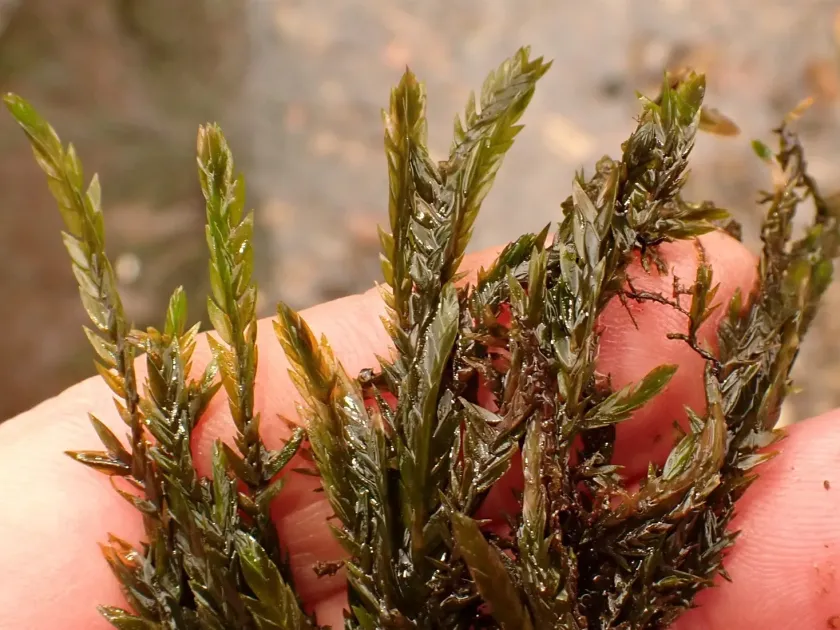
Description
Growing requirements
Willow moss (Fontinalis antipyretica) is a perennial aquatic moss belonging to the Fontinalaceae family. Unlike many other mosses, it is fully submerged and thrives by attaching its rhizoids to solid substrates like rocks, submerged wood, or concrete in flowing water systems.
The natural range of the species encompasses the temperate zones of the Northern Hemisphere, extending across Europe, Asia, and North America. As a cultivated crop, it is highly valued for its adaptability to varying light intensities and water temperatures in artificial aquatic environments.
The plant requires high-quality, oxygenated water to maintain its health. It is particularly sensitive to water stagnation, which causes sediment buildup on the leaves; therefore, maintaining a steady current is essential for healthy growth and preventing plant decay.
Regarding soil and substrate, Willow moss does not utilize soil in the traditional agricultural sense. Instead, it requires firm, clean surfaces such as volcanic rock or coarse gravel to securely anchor itself and establish long, cascading, dark green stems.
Climatic requirements for successful cultivation involve avoiding extreme heat. While the species is quite hardy, optimal growth is observed in cool-to-moderate water temperatures, making it a perfect candidate for year-round cultivation in many temperate regions.
Yield
The primary economic use of Fontinalis antipyretica lies in its role as a biological filter. In modern aquafarming, these mosses act as natural nutrient sinks, effectively removing nitrates and phosphates from the water column and improving overall water clarity.
In ornamental horticulture, the moss is extensively used for aquascaping and pond decoration. Its aesthetic appeal comes from its ability to form dense, weeping carpets that provide a natural look to artificial waterfalls, streams, and underwater stone features.
Fishery management utilizes this moss as a critical spawning substrate. The intricate structure of the stems provides a safe haven for fish eggs, protecting them from predators and providing a rich surface for microbial growth that serves as the first food source for fry.
Yield management involves the periodic harvesting of excess biomass. As the plant expands to cover more surface area, cultivators can prune segments to propagate new colonies, ensuring a continuous supply for both commercial and personal use.
Beyond its modern uses, the historical name "antipyretica" reflects the plant's traditional application in soaking roofs and wooden structures with water to provide a fire-retardant barrier, showcasing the historical utility of this unique aquatic species.
Main diseases and pests
The most significant threat to a healthy Willow moss crop is the rapid proliferation of filamentous algae. Because they share similar environmental needs, algae often outcompete the moss for space and light, necessitating vigilant biological or manual control methods.
Water quality degradation, specifically the introduction of high levels of fertilizers or pollutants, can lead to immediate tissue necrosis. Maintaining a stable balance of minerals is critical, as sudden shifts in chemistry can cause the plant to drop its leaves.
Pests such as certain species of aquatic snails can cause localized damage to the moss by grazing on the stems. In intensive cultivation systems, managing snail population density is crucial to maintaining the visual and biological integrity of the moss beds.
Fungal pathogens represent another potential threat, often triggered by insufficient water circulation or excessive accumulation of organic debris. If the moss becomes buried in decaying matter, the risk of rot increases significantly, potentially leading to colony death.
To mitigate these threats, successful growers implement a maintenance program that includes regular inspection, removal of dead fragments, and ensuring that water flow remains consistent throughout the entire cultivation area.