
American tarbush
Flourensia cernua
Description
Growing requirements
American tarbush (Flourensia cernua) is a perennial shrub belonging to the Asteraceae family. It is a highly specialized plant species native to the arid desert regions of the southwestern United States and northern Mexico.
The plant is uniquely adapted to harsh environmental conditions, thriving in areas with low rainfall and high solar radiation. It serves as a key indicator of desert and semi-desert ecosystems.
It prefers well-drained, sandy, or rocky soils. One of its most valuable properties is its high tolerance to soil salinity, allowing it to occupy areas unsuitable for traditional crops.
Cultivation requirements are minimal, as the plant is specifically adapted to water-stressed environments. Overwatering is the most significant error in its cultivation, often leading to rapid root decay.
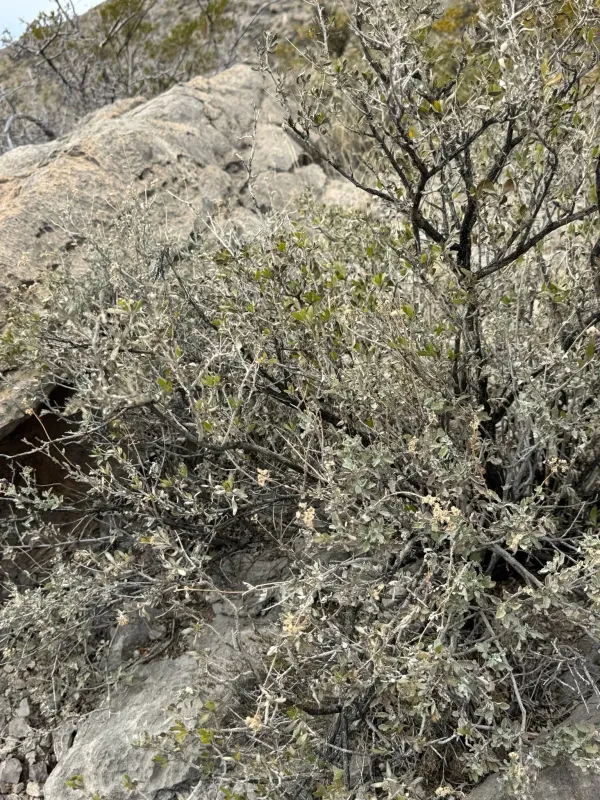
Botanically, the plant is characterized by its resinous leaves, which emit a distinct, strong odor. These resins are an evolutionary adaptation designed to reduce moisture loss and protect the plant from various herbivores.
Yield
In terms of agricultural utility, American tarbush is primarily valued for its role in land reclamation and soil stabilization. Its extensive root system prevents wind erosion effectively.
While the plant provides some biomass, it is not considered a primary forage crop. Its leaves are generally unpalatable to most livestock due to the high concentration of secondary compounds.
Research into the chemical properties of tarbush suggests potential in the development of natural plant-based pesticides and fungicides, leveraging its inherent defensive compounds.
Biomass productivity is relatively low, reflecting the plant's strategy for survival in low-resource environments. It prioritizes longevity and resilience over rapid growth rates.
Its primary господарське (economic) use is in eco-restoration projects, where it acts as a hardy cover crop to improve degraded arid landscapes and prevent further desertification.
Main diseases and pests
American tarbush exhibits remarkable resistance to common plant diseases. Its biological composition provides a natural barrier against fungal and bacterial pathogens that affect other crops.
Rodents represent the most common biological threat, as they may feed on the stems and bark during periods of food scarcity. Protective measures may be necessary for young stands.
Overgrazing remains the most critical threat posed by anthropogenic activity. The physical destruction of the shrub canopy limits the plant's ability to undergo natural recovery.
Insect pests are rarely a significant concern, as the plant's strong resinous secretions serve as a powerful deterrent. Chemical pest control is almost never required for this species.
Soil compaction due to heavy machinery can negatively affect the root zone, hindering the plant's ability to access deeper moisture reserves during extreme droughts.