
Flagellaria indica
Flagellaria indica
Description
Growing requirements
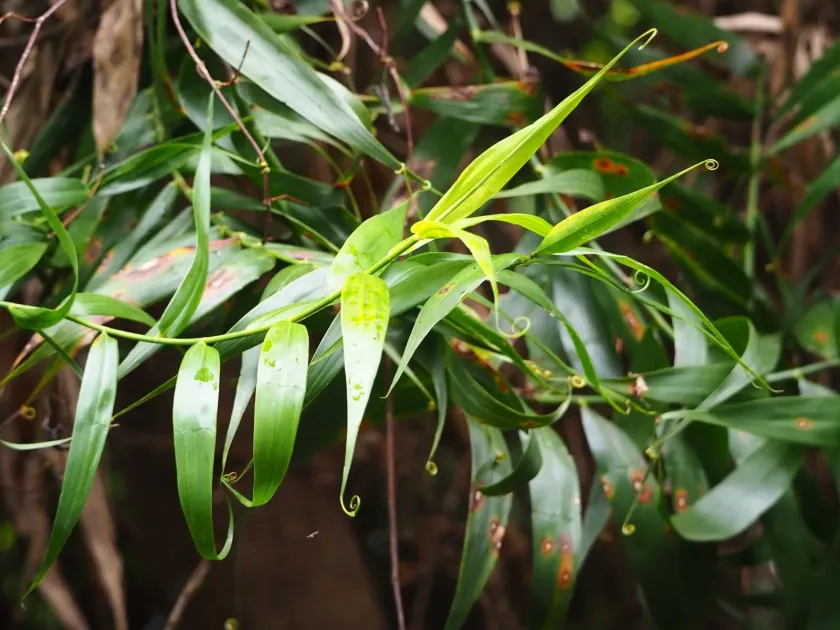
Flagellaria indica, commonly known as the supplejack or whip vine, is a perennial flowering plant belonging to the Flagellariaceae family. It is a robust climbing vine noted for its unique leaf tips that function as tendrils.
The native range of this species extends across tropical regions of Africa, Asia, Australia, and the Pacific Islands. It typically inhabits coastal forests, thickets, and sandy areas, where it utilizes its climbing mechanism to reach sunlight.
Botanically, the plant is characterized by its long, reed-like stems and alternate, lanceolate leaves. The extension of the midrib into a coiled tendril is a key adaptation, allowing the vine to scale tall trees and shrubs in its natural habitat.
To cultivate Flagellaria indica, a warm, humid climate is essential. The soil should be consistently moist and rich in organic matter. It thrives in environments where frost is absent, and the humidity remains high year-round.
Proper management of the vine requires the provision of vertical structures for climbing. In cultivation, it is important to prevent waterlogging while ensuring the root zone has enough hydration, especially during peak growth seasons.
Harvesting
The primary economic use of Flagellaria indica revolves around its stems, which are prized for their exceptional flexibility and strength. Historically, indigenous peoples have harvested these stems to weave baskets, mats, and cordage.
Ethnobotanical records suggest that the plant also possesses medicinal properties. Various parts of the plant, including leaves and roots, have been utilized in traditional remedies to treat ailments, often prepared as decoctions or poultices.
Harvesting usually involves cutting the mature stems that have developed sufficient mechanical strength. Sustainable practices are prioritized to ensure the vine population can recover, particularly given its role in supporting the local forest ecosystem.
Once collected, the stems are stripped of foliage and allowed to dry slowly in the shade. This curing process is crucial to stabilize the fibers, ensuring they do not become brittle or lose their tension during the weaving process.
In modern landscape design, this vine is occasionally used for its exotic appeal in botanical gardens and conservatory settings. Its rapid growth and climbing habit make it a distinctive choice for areas needing naturalistic green walls.