
New Zealand fescue
Festuca novae-zelandiae
Description
Growing requirements
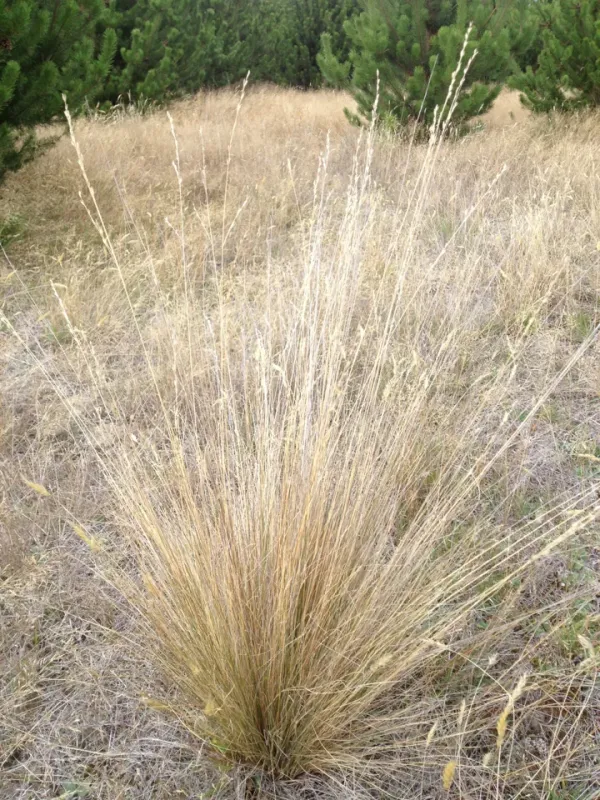
New Zealand fescue (Festuca novae-zelandiae) is a perennial member of the Poaceae family. It is a bunch-forming grass native to the grasslands and alpine regions of New Zealand.
The plant exhibits remarkable hardiness, allowing it to colonize environments with poor soil fertility and rocky substrate where many other forage crops would fail.
In terms of climatic preferences, the species thrives in cool, temperate climates characterized by high wind exposure and significant seasonal temperature fluctuations.
Botanically, it forms dense tussocks with narrow, rigid leaves. Its extensive root system plays a crucial role in soil stabilization and moisture retention in arid or hilly landscapes.
From an agricultural perspective, it is primarily used for maintaining soil integrity and providing sustainable forage for livestock in extensive pastoral systems.
Main diseases and pests
The primary threat to the longevity of Festuca novae-zelandiae stands is intensive overgrazing, which compromises the structure of the tussock and allows soil degradation.
Invasive weed species pose a major challenge, as they can outcompete the native fescue for nutrients, water, and sunlight, leading to biodiversity loss.
Pests such as grass grubs and certain insect larvae can cause damage to the root system, weakening the plant's ability to maintain its dense bunch architecture.
Fungal pathogens associated with prolonged moisture periods may lead to root rot, especially in poorly drained soils, reducing the overall biomass production.
Management strategies focus on sustainable grazing cycles and the removal of invasive plants to ensure the long-term health and productivity of the pasture.