
Calabrian fescue
Festuca calabrica
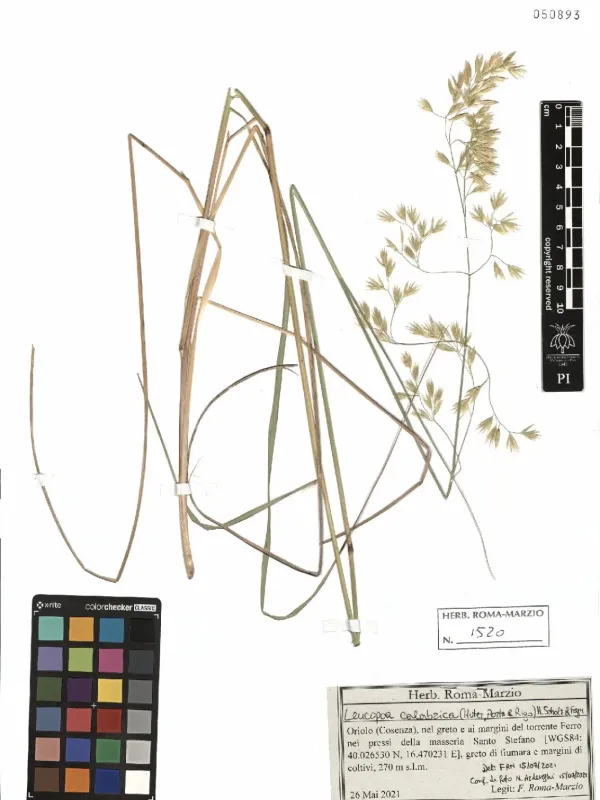
Description
Sowing dates
Calabrian fescue (Festuca calabrica) is a perennial grass species belonging to the Poaceae family. Sowing seeds of this crop is recommended in early spring when the soil has sufficient moisture reserves, which is critical for achieving uniform seedling emergence.
Late autumn sowing is also possible, allowing the seeds to undergo natural stratification. Agronomists choose sowing times based on regional climate specifics to ensure young seedlings are not exposed to late frosts.
The seeding depth should be no more than 1–2 centimeters, as the small seeds of the fescue are sensitive to soil depth and compaction. Standard grass seeders are used, followed by mandatory rolling to ensure good soil-to-seed contact.
The seeding rate is calculated based on purity and germination capacity, typically ranging from 12 to 16 kg per hectare for pure stands. When establishing mixed grass stands, the seeding rate is adjusted according to the crop's proportion in the agro-ecosystem.
During the first weeks, it is essential to keep the field clean, as Calabrian fescue grows slowly and can be easily suppressed by rapidly developing weeds in the early stages.
Growing requirements
The crop has moderate requirements for growing conditions, although it prefers well-drained loamy or sandy loam soils with a neutral or slightly acidic pH level to maximize productivity.
Calabrian fescue demonstrates good tolerance to dry spells due to its well-developed root system, allowing the plant to maintain physiological activity even under moderate moisture deficit conditions.
The plant is light-loving; therefore, it develops best in open areas with full sun exposure throughout the day. Excessive shading negatively affects tiller density and overall biomass quality.
In terms of nutrition, Calabrian fescue responds well to balanced mineral fertilizers, especially nitrogen applications applied during the active growth phase in spring and after each mowing.
To maintain soil fertility in long-term stands, it is recommended to rotate or mix the crop with legumes, which contribute to enriching the soil with biologically available atmospheric nitrogen.
Yield
The productivity of Calabrian fescue depends on the level of agronomic practices, soil types, and regional climatic conditions. In favorable years, the crop is capable of producing high yields of quality green mass.
The main хозяйственное use of fescue is for establishing hay meadows and pastures for livestock grazing. It is valued for its palatability and high nutritional content, which remains stable until the flowering stage.
Hay yields under intensive management can reach 5–8 tons per hectare, depending on the number of cuts and moisture availability during the growing season.
A significant advantage is the plant's ability to maintain nutritional value during preservation, making Calabrian fescue an excellent component for haylage and silage production.
For seed production, yields are generally lower and require close monitoring of the panicle maturation period to minimize losses from seed shattering during over-ripening.
Main diseases and pests
Like many grass species, Calabrian fescue can be susceptible to specific fungal diseases such as leaf rust and powdery mildew, especially under high humidity conditions.
Common pests include cereal flies and leafhoppers, which can significantly reduce stand density if large populations develop during the spring season.
Timely field diagnostics allow for preventive fungicide and insecticide treatments, minimizing economic losses from biomass reduction.
Following crop rotation rules and optimal mowing schedules helps naturally reduce the disease pressure and prevent pest accumulation in the fields.
If early signs of infestation are detected, prompt mowing can often interrupt the development cycle of many pests and stimulate the regrowth of healthy forage.
Harvesting
The timing of the Calabrian fescue harvest is determined by the plant's development stage, as the concentration of nutrients in the leaves and stems peaks at this time.
For high-quality hay production, the best time to harvest is at the beginning of the heading phase, before the plant accumulates too much fiber, which would reduce the feed's digestibility.
Modern harvesting equipment allows for rapid cutting and wilting, which reduces the time the crop spends exposed to direct sunlight, helping to preserve vitamins and color.
For seed production, harvesting is performed in two stages, waiting for the panicles to turn brown before threshing using combines with pre-adjusted settings.
Post-harvest field management, including removing debris and fertilizing if necessary, promotes faster regrowth and helps preserve the perennial nature of the stand for several years.