
Ferocactus latispinus
Ferocactus latispinus
Description
Sowing dates
Ferocactus latispinus is primarily propagated through seeds. The optimal time for sowing is during the spring months, from March to May, when increasing day length and temperature promote healthy germination and early growth of the seedlings.
A sterile, well-draining substrate is essential for success. A mixture containing coarse sand, pumice, and a small portion of peat or leaf mold is recommended to prevent water stagnation. Seeds are sown on the surface and lightly covered with fine grit.
Maintaining a constant temperature between 22 and 25 degrees Celsius is crucial. Using a humidity dome or glass cover helps maintain the required moisture levels until germination occurs, which usually takes between two to four weeks.
Seedlings should remain in their original container for at least a year until they are robust enough for transplantation. Handling must be minimal as the roots are delicate and prone to damage during the early stages of development.
Selecting the right pot size is critical; it should only be slightly larger than the root ball. Over-potting leads to excess moisture retention in the soil, which is the most common cause of failure in young cactus cultivation.
Growing requirements
Belonging to the Cactaceae family, this species is native to the arid landscapes of Mexico. It is highly adapted to high-light environments and thrives in rocky, mineral-rich soils that provide excellent drainage.
Bright, direct sunlight is a fundamental requirement for this cactus. It requires several hours of full sun daily to develop its signature wide, curved spines and maintain a compact, spherical growth habit; otherwise, the plant will etiolate.
During the active growing season in summer, the cactus requires moderate watering, but only after the substrate has dried out completely. Watering should be done at the base of the plant to avoid trapping moisture in the stem tissue.
Winter dormancy is essential for the health of Ferocactus latispinus. During this period, the plant should be kept in a cool, bright location with temperatures around 10–12 degrees Celsius and should remain almost entirely dry.
The soil pH should be neutral to slightly acidic. A specialized cactus mix combined with inorganic elements like perlite or crushed lava rock ensures the aeration necessary for the root system to breathe and remain healthy.
Yield
As a primarily ornamental crop, the "yield" of Ferocactus latispinus is defined by its decorative quality and health. It is highly valued in the horticultural market for its symmetry and impressive, long-lasting spines.
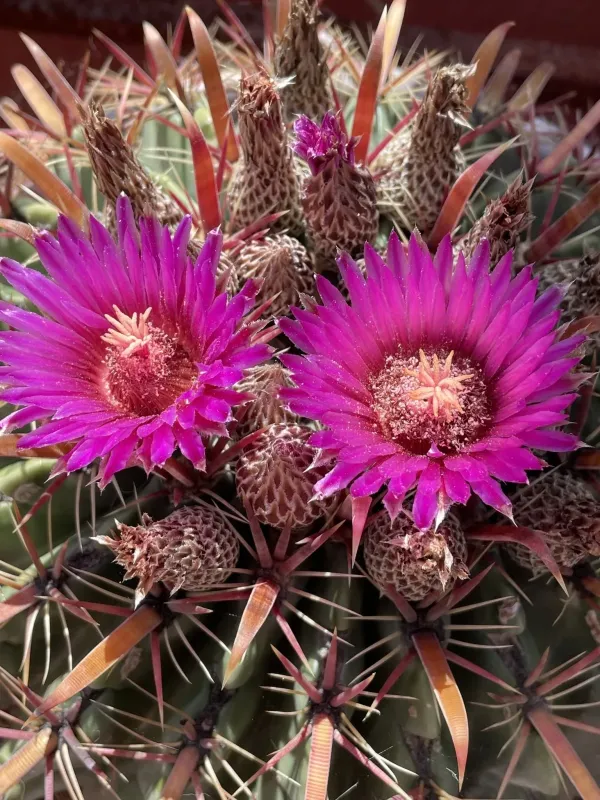
Quality specimens are recognized by their perfect globular shape and the density of their spines. Mature plants that have reached flowering age are particularly sought after by collectors, as they produce vibrant purple or pink flowers.
The commercial cultivation of this cactus requires patience due to its relatively slow growth rate. High-quality production involves maintaining steady growth without forcing the plant, ensuring a natural and resilient structure.
Sustainability in production is measured by the plant's long-term endurance in container gardening. A well-cared-for Ferocactus latispinus can serve as a long-term display plant for decades, provided it is repotted periodically.
Producers focus on the development of the spine structure, which is enhanced by optimized light exposure and balanced potassium-heavy fertilizers during the active growing months to ensure structural integrity and aesthetic appeal.
Main diseases and pests
The primary threats include rot, specifically root and stem rot, often caused by overwatering or poor ventilation. These conditions are usually fatal if not detected and treated early through pruning and fungicide application.
Mealybugs and spider mites are the most common pests that infest these cacti. These insects thrive in dry, warm environments and can cause significant damage to the plant's epidermis and general vitality if left untreated.
Sunburn is a frequent issue if a plant is moved abruptly from a low-light area to direct sunlight. Such damage is permanent and manifests as bleached or scarred patches on the surface of the stem.
Chlorosis may occur if the water quality is poor or if the soil pH becomes too alkaline, preventing the plant from absorbing necessary micronutrients. Regular testing of the substrate and use of soft water are recommended.
- Routine inspections of the growth apex for pest colonization.
- Maintaining optimal airflow around the plant to prevent humidity-related issues.
- Using systemic insecticides at the first sign of pest infestation.