
Puccinellia distans
Puccinellia distans (Jacq.) Parl.
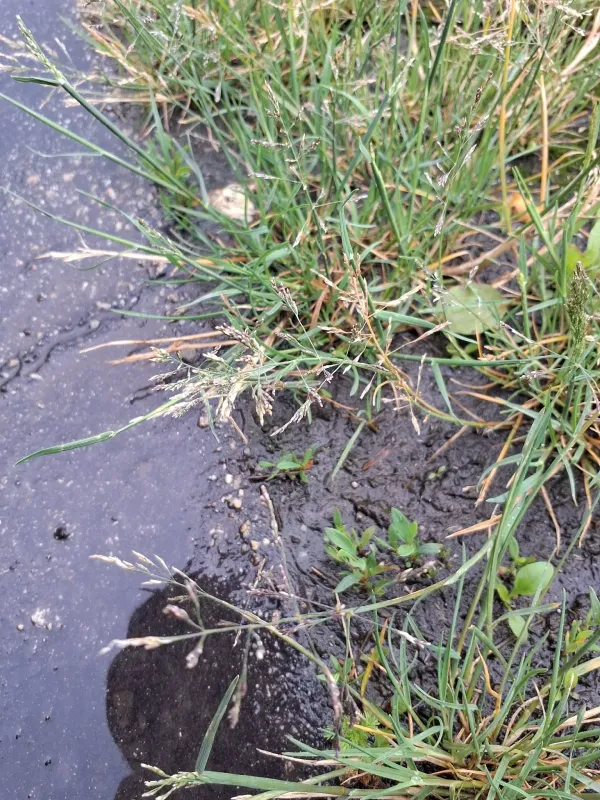
Description
Sowing dates
Sowing of Puccinellia distans is best performed in early spring to take advantage of soil moisture. The seeds are very small, requiring a firm and shallow seedbed to ensure successful germination.
Seeding rates typically range from 10 to 15 kilograms per hectare. Mechanical drilling at a depth of no more than 1 centimeter is recommended to ensure the seeds are not buried too deeply.
Using a cultipacker after seeding is essential for optimal results. This practice ensures proper soil-to-seed contact, which is vital for the survival of the seedlings in saline environments.
In cases of pasture restoration, broadcasting seeds over the area followed by light harrowing can be an effective method, especially on large, uneven, or saline-affected landscapes.
Management during the establishment year is crucial as the seedlings grow slowly. Controlling competing annual weeds in the initial phase is necessary to ensure the stand becomes well-established.
Growing requirements
Puccinellia distans, commonly known as weeping alkaligrass, is a member of the Poaceae family. It is recognized as a halophyte, perfectly adapted to environments with high soil salinity.
This grass thrives in saline, alkaline, and sodic soils where other conventional forage crops would fail. It is a vital tool for land reclamation in areas affected by irrigation-induced salinity.
The climate requirements are relatively flexible; the species is hardy and tolerant of cold winters and varying degrees of drought. It can also withstand brief periods of inundation.
Regarding soil fertility, it is not demanding. Its primary role is to serve as a pioneer species in degraded landscapes, where it helps stabilize the soil and prevent further erosion.
It prefers neutral to slightly alkaline pH levels, which are typical for salt-affected terrains, and can grow successfully even in compacted heavy clay soils.
Yield
The forage yield of Puccinellia distans is moderate but highly valuable given the sites where it grows. Under favorable moisture, it can produce significant biomass for grazing livestock.
It possesses excellent regrowth capabilities, allowing it to withstand repeated grazing cycles during the growing season. This durability makes it a staple for saline pasture systems.
Nutritionally, the grass provides good quality feed during its vegetative stage. It remains palatable for sheep and cattle, which often graze it throughout the summer and autumn.
Seed production requires harvesting when the panicles are fully mature, though farmers must act promptly as the species is known to shatter seeds easily when fully dry.
Beyond forage, the crop serves as a biological drainage tool, helping to manage salt levels in the root zone through its dense and deep root systems.
Main diseases and pests
The species is remarkably robust against typical crop diseases. Because it often grows in extreme habitats, it naturally avoids many common pathogens that affect crops in fertile soil.
Pests are rarely a significant concern. Occasional sightings of aphids or leaf-feeding insects do not usually warrant chemical intervention due to the plant's resilience.
The main threat is the loss of the stand due to severe overgrazing or changes in local hydrology that might favor invasive species over the established alkaligrass.
Maintaining a rotational grazing schedule is the best preventive measure to keep the sward healthy and prevent the soil from becoming overly compacted.
Monitoring for signs of nutrient deficiency or drought stress is recommended, although the plant is highly adapted to tolerate the harsh conditions typical of its native range.