
Euphorbia xylophylloides
Euphorbia xylophylloides
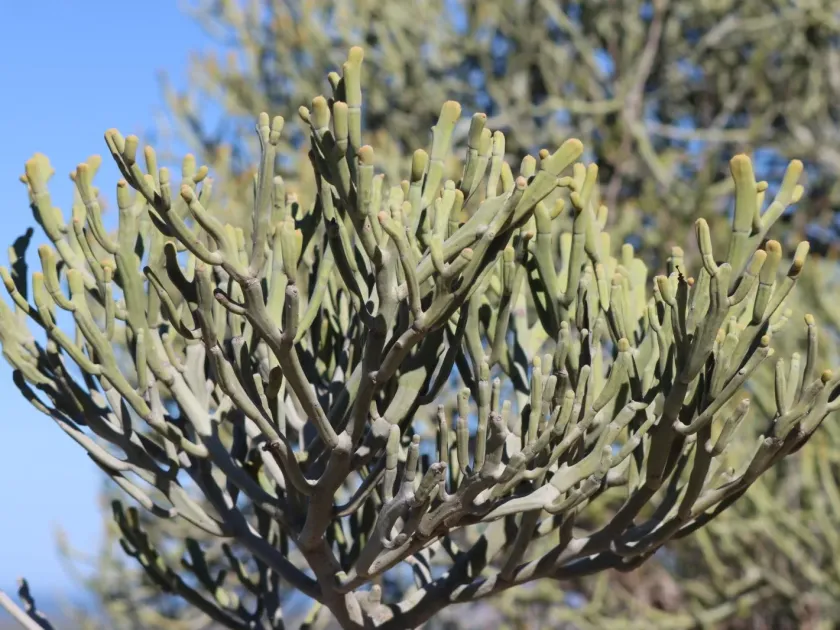
Description
Growing requirements
Euphorbia xylophylloides is a notable succulent species belonging to the Euphorbiaceae family. Native to Madagascar, this shrub exhibits extreme adaptation to arid environments, making it a subject of interest for both specialized botanical collections and ornamental horticulture.
The plant is distinguished by its flattened, leafless stems that perform photosynthesis. This physiological adaptation allows the plant to reduce water loss significantly, enabling it to thrive in regions with sparse rainfall and high solar radiation.
Cultivation requires a highly porous and inorganic soil mix, typically composed of coarse sand, pumice, and perlite. A substrate with high drainage capacity is essential to mimic the plant's natural rocky habitat and prevent root asphyxiation.
Temperature requirements are stringent, favoring warm conditions between 20°C and 30°C. Euphorbia xylophylloides does not tolerate frost, and even brief exposure to cold, damp conditions can cause severe tissue damage and fungal infections.
Light intensity is the primary driver of growth. To maintain its unique structural morphology and prevent etiolation, the plant must be placed in a position that receives full sun or high-intensity grow lights for the duration of its active growth cycle.
Main diseases and pests
The defensive mechanisms of Euphorbia xylophylloides, specifically its potent milky latex, provide an inherent defense against many generalist insects. However, this does not grant total immunity, and vigilant monitoring remains a necessary part of the maintenance cycle.
Mealybugs are the most common pest observed on this species, often congregating in the joints of the flattened stems. Their feeding causes localized yellowing and can provide entry points for secondary bacterial or fungal pathogens.
Root rot is the most significant threat to plant health, typically occurring due to improper irrigation practices. Symptoms include basal browning and softening of the stem, which usually indicate that the root system has already undergone irreversible decay.
Control strategies for infestations involve the use of systemic insecticides or mechanical removal using alcohol-based solutions on affected areas. Caution should be exercised to avoid contact with the caustic sap during these procedures.
Maintaining a clean growing environment and ensuring excellent air circulation around the plants is critical. Proper ventilation aids in the rapid drying of the substrate surface and reduces the overall humidity levels that favor fungal development.