
Viguier's spurge
Euphorbia viguieri
Description
Growing requirements
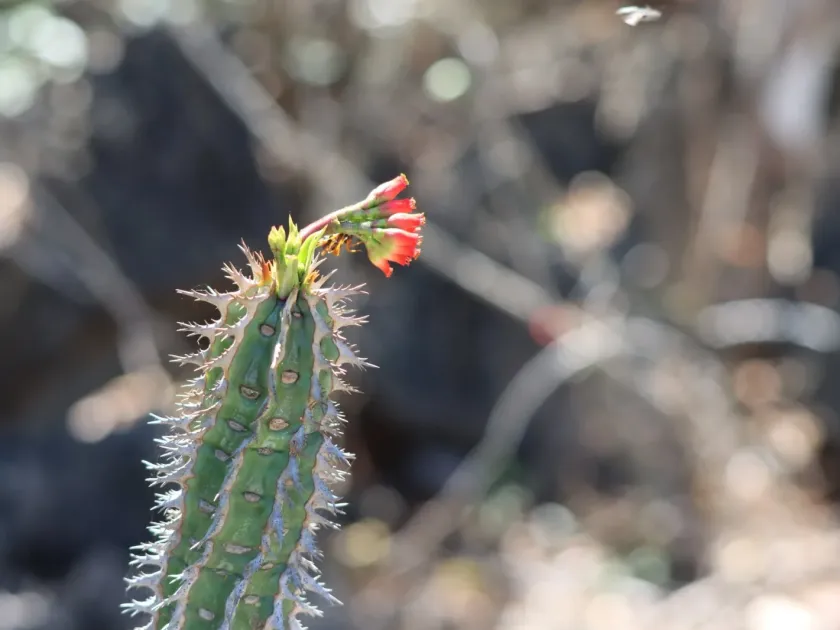
Viguier's spurge (Euphorbia viguieri) belongs to the Euphorbiaceae family. This succulent is native to Madagascar and is highly valued by collectors for its unusual, spiny, column-like stems and attractive cyathia.
The plant requires bright, indirect sunlight to thrive. While it can handle some direct morning sun, intense midday light in a greenhouse or window can scorch its stems, so proper positioning is essential for plant health.
Temperature requirements are standard for most Madagascar succulents, preferring warmth between 22-25 degrees Celsius during the growing season. In winter, keeping it cool but above 15 degrees Celsius helps the plant enter a natural dormancy.
The growing medium must be highly porous. A specialized mix of cactus soil, perlite, and coarse sand provides the necessary drainage required to ensure that the root system does not remain damp for long periods.
Watering should be performed cautiously. Always wait for the substrate to dry out completely throughout the pot before applying more water, as this species is particularly susceptible to crown rot if overwatered.
Main diseases and pests
Root rot is the most serious threat to Euphorbia viguieri. It occurs primarily due to poor drainage or excessive watering, leading to the rapid decay of the root system and the base of the main stem.
Mealybugs are frequent pests that infest the crown and the ribs of the stems. They are difficult to detect early, so regular inspection of the growth tips is necessary to prevent a widespread infestation.
Spider mites can occur if the humidity levels are too low. These pests can cause yellowing and pitting on the skin of the stems, significantly reducing the plant's ornamental value and overall vitality.
Scale insects may attach to the stem, appearing as small brown bumps. If discovered, they should be removed physically or treated with systemic insecticides to prevent them from sapping the plant's energy.
The plant contains a toxic milky sap that serves as a defense mechanism against herbivores. Always use protective gloves when pruning or repotting to prevent contact with skin and eyes.