
Euphorbia turbiniformis
Euphorbia turbiniformis
Description
Growing requirements
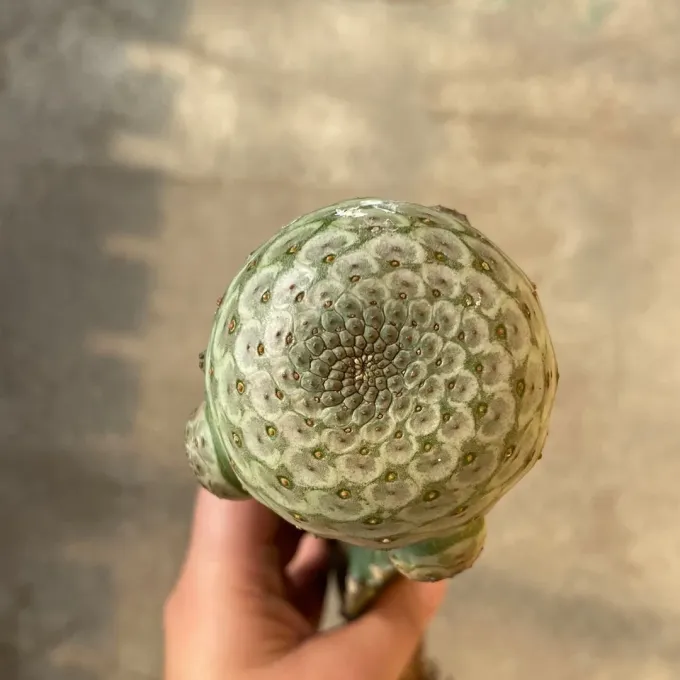
Euphorbia turbiniformis is a unique succulent species belonging to the family Euphorbiaceae. Native to the arid regions of Somalia, it has evolved a highly specialized form characterized by a low, turbinate stem that remains largely subterranean in its natural habitat.
The cultivation of this plant requires conditions that strictly mimic its native desert environment. The primary requirement is an extremely well-draining, mineral-heavy substrate that prevents moisture stagnation around the stem base, which is highly susceptible to decay.
Light intensity plays a vital role in maintaining the plant's characteristic compact, squat shape. In indoor or greenhouse environments, it requires maximum exposure to bright, filtered light to prevent etiolation and ensure the healthy development of its structural tissue.
Temperature management is another key aspect of its agrotechnology. The plant thrives in warm, stable conditions during its growth phase and requires a dry, cooling period during winter dormancy to mimic the seasonal changes typical of its native desert range.
Economic use of Euphorbia turbiniformis is limited to specialized horticulture and the botanical trade. It is highly sought after by collectors for its unusual morphology, but it is not utilized for food, fiber, or industrial production due to its slow growth rates.
Main diseases and pests
Pathogenic threats are primarily associated with inappropriate irrigation practices. Fungal infections, particularly root and crown rot, are the leading cause of mortality for this species when grown in overly dense or damp potting media.
Pest management focuses on controlling mealybugs and spider mites. Due to the plant's unique recessed structure, these pests are difficult to eradicate manually, necessitating the use of systemic insecticides approved for succulent culture.