
Euphorbia tubiglans
Euphorbia tubiglans
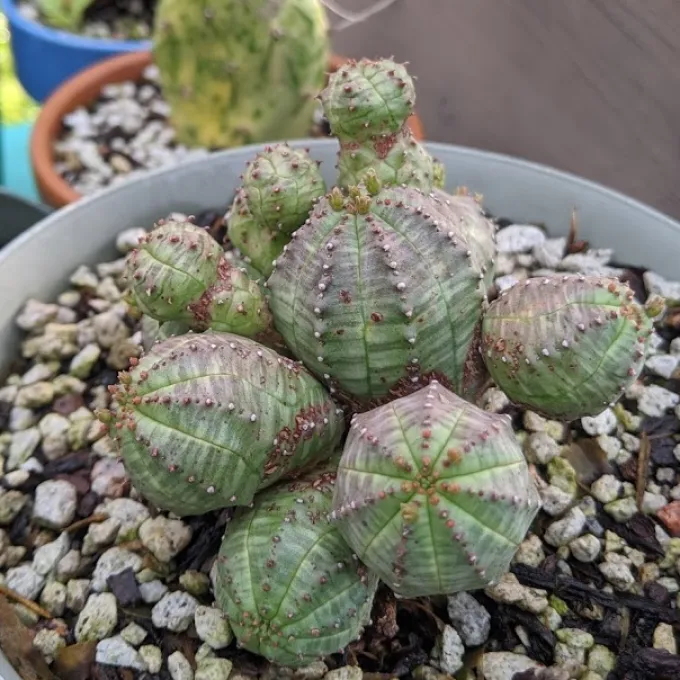
Description
Growing requirements
Euphorbia tubiglans is a unique succulent species belonging to the vast Euphorbiaceae family. This plant is endemic to South Africa, primarily found in the arid regions of the Cape Province, where it has adapted to extreme survival conditions over centuries of evolution.
The appearance of this euphorbia is characterized by pronounced succulence: the stem has a cylindrical shape and is capable of storing significant water reserves to survive long periods of drought. The surface of the stem is covered with distinctive tubercles, from which modified spines can develop, acting as a defense mechanism against herbivores.
For successful development, this crop requires high temperatures during the growing season and intense sunlight. In its natural habitat, the plant grows in rocky or sandy soils with extremely low organic matter content and excellent drainage, which prevents water stagnation in the root zone.
Under agronomic or collection conditions, it is critical to follow a watering regime that mimics the seasonality of African rains. Excessive moisture combined with low temperatures is fatal to this plant, as it easily triggers rotting processes in the succulent stem tissues.
The economic use of the species is limited to ornamental gardening and scientific collecting. Given its slow growth rate and specific environmental requirements, the crop has no industrial significance as agricultural raw material, but it is highly valued by plant breeders and botanical gardens.
Main diseases and pests
The main threats to Euphorbia tubiglans are fungal infections resulting from poor agricultural practices. Primarily, these include various types of root and stem rot that spread rapidly when the substrate becomes waterlogged.
Among the pests, mealybugs and spider mites pose the greatest danger, as they target the succulent stems of the plant. Regular monitoring and timely application of systemic insecticides allow for effective control of pest populations.