
African milk tree
Euphorbia triangolensis
Description
Growing requirements
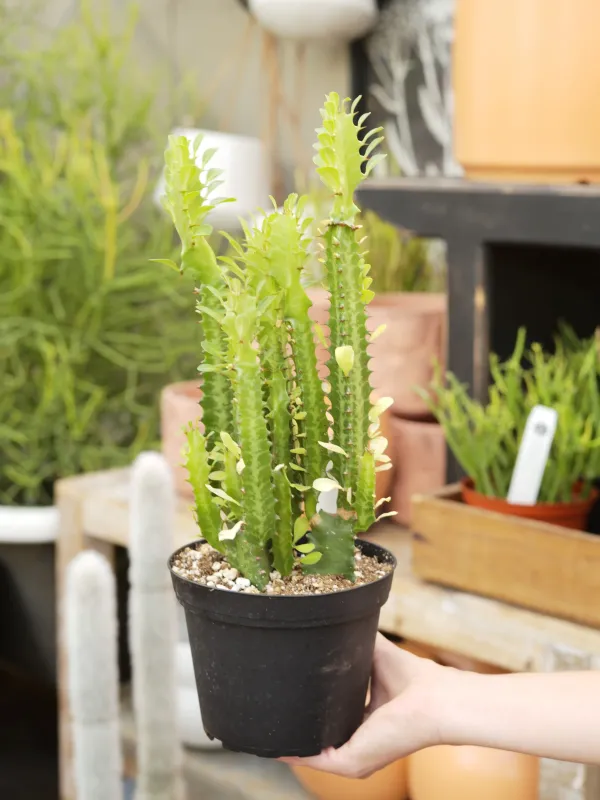
The African milk tree (Euphorbia trigona) is a member of the Euphorbiaceae family. This perennial succulent is characterized by its robust, ribbed stem adorned with spines and small, deciduous leaves.
Originating from the arid regions of tropical Africa, this crop thrives best under bright, indirect sunlight. Intense, direct sun exposure may lead to surface burns on young stem segments.
The ideal temperature range for active growth is between +20°C and +28°C. During the winter dormancy phase, the plant benefits from cooler conditions, ideally around +15°C, to ensure a successful recovery period.
The plant requires well-draining soil to prevent moisture accumulation. A mixture consisting of loamy soil, leaf mold, and coarse sand in equal proportions provides the necessary structural integrity for the roots.
Watering should be managed carefully, allowing the soil to dry out significantly between sessions. Overwatering is the most common cause of root rot and overall decline in plant vigor.
Main diseases and pests
Common pests affecting Euphorbia trigona include spider mites and mealybugs. These organisms feed on plant fluids, leading to stunted growth, discoloration, and structural weakness in the succulent stems.
Root rot is the primary pathological threat, typically induced by waterlogged soil conditions or poor aeration in the planting medium. Prompt intervention involving repotting and root pruning is necessary for survival.
Bacterial infections can propagate rapidly if the plant is kept in environments with high humidity and insufficient airflow. Maintaining clean growing conditions is vital to suppress potential outbreaks.
The sap of the African milk tree is highly toxic and irritating to human skin and mucous membranes. It is mandatory to wear protective gloves and eyewear whenever handling or pruning the plant.
Preventive maintenance includes periodic inspection of stem ribs for pest activity and the use of systemic insecticides during the spring to ensure the long-term health and development of the succulent.