
Euphorbia tortirama
Euphorbia tortirama
Description
Growing requirements
Euphorbia tortirama is a specialized succulent species belonging to the Euphorbiaceae family. Originating from arid environments in Africa, it has evolved specific anatomical adaptations to withstand harsh heat and irregular moisture availability, making it a robust ornamental choice.
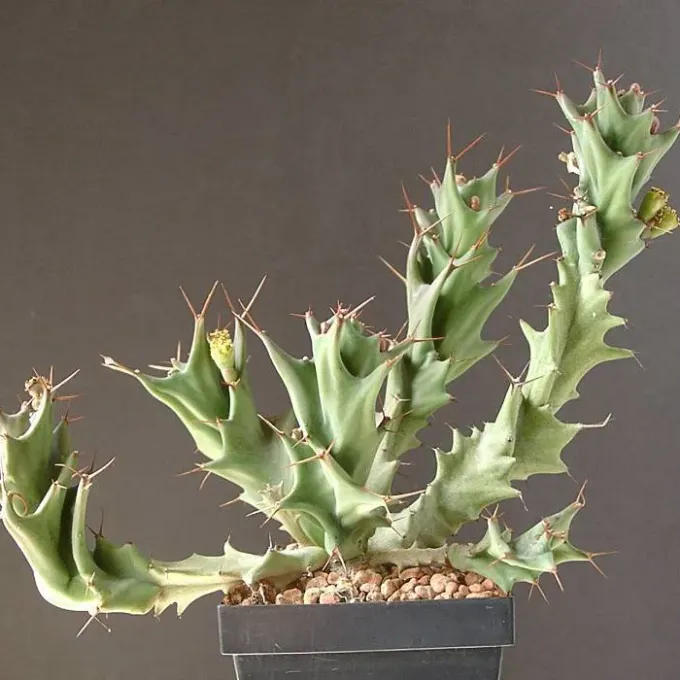
The plant is defined by its architectural, spiraling stems that give it a unique sculptural quality. Like other succulents, it stores water in its fleshy, columnar stems, which are lined with thorns that function as protective structures against herbivores in its natural range.
For cultivation, Euphorbia tortirama demands extremely well-draining soil to mimic its native substrate. A mix consisting of mineral components, such as pumice or coarse grit, combined with a small amount of loamy soil, is highly recommended to ensure root aeration.
Climate requirements for this species are centered on high light levels and warm temperatures. It thrives in bright, filtered light and requires a consistent temperature range, avoiding any exposure to frost, which can cause internal cell rupture and plant death.
The primary economic use of this plant is in the ornamental trade, particularly for xeriscaping and professional succulent collections. Its distinct morphology makes it a sought-after subject for interior design and arid-garden displays across various climatic zones.
Main diseases and pests
Root and stem rot caused by overwatering represents the most significant threat to the health of Euphorbia tortirama. Once the internal tissues become waterlogged, opportunistic pathogens thrive, leading to rapid decay that is often irreversible.
Common pests associated with this species include spider mites and mealybugs, which tend to infest the crevices between the spiral ribs of the stem. Regular monitoring and physical removal, or the use of appropriate pesticides, are necessary to control these infestations.
The plant contains a toxic milky sap that is a defense mechanism against insects and animals. This latex is known to cause severe skin irritation and is particularly dangerous if it comes into contact with the eyes or open wounds, necessitating careful handling.
During any propagation or pruning, it is essential to wear protective gloves and safety goggles. If the plant is cut, the milky exudate should be blotted and the tool cleaned immediately to prevent cross-contamination between specimens in the collection.
To ensure long-term vitality, growers should prioritize ventilation and prevent humidity buildup. A balance between moisture, light, and airflow serves as the best defense against both bacterial infections and common succulent pests.