
Euphorbia tinctoria
Euphorbia tinctoria
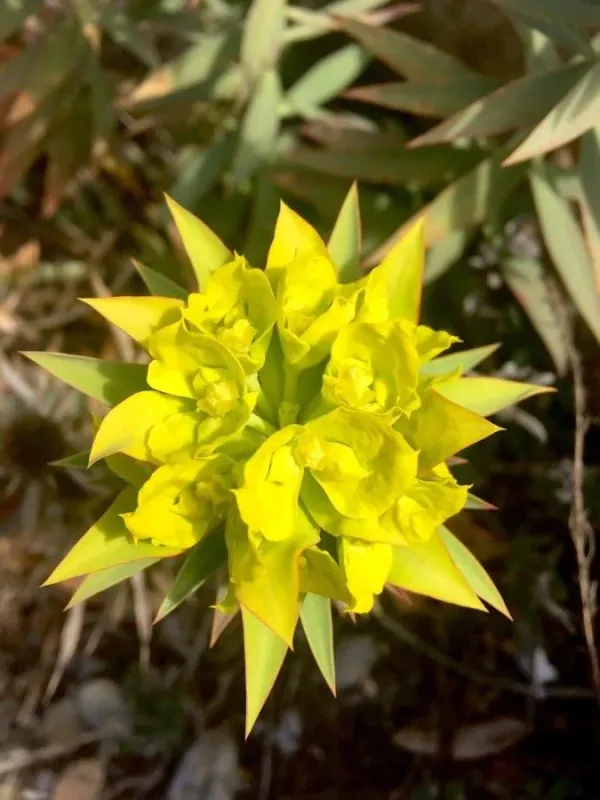
Description
Sowing dates
Euphorbia tinctoria is a perennial herbaceous plant belonging to the Euphorbiaceae family. It is typically propagated via seeds, with sowing occurring in early spring once soil temperatures reach 10-12 degrees Celsius.
The seeds require stratification to break dormancy and ensure uniform germination rates across the field. Proper seedbed preparation, including fine-tillage, is crucial for success.
Sowing should be done at a shallow depth of approximately 1-2 centimeters. Row spacing is generally kept at 45-60 centimeters to allow for mechanical weeding and proper aeration.
During the first year, the crop establishes its root system and forms a basal rosette, exhibiting slow initial growth above ground.
By the second year, the plant enters its productive phase, developing vigorous stems that contain the desired dyes, making it a valuable industrial crop.
Growing requirements
This crop thrives in sunny, open locations as it is highly photophilous. Adequate light exposure is essential for maximizing the biosynthesis of dye pigments.
The ideal soil conditions include well-drained loamy or sandy soils with a neutral pH. The plant is remarkably drought-tolerant once established due to its deep taproot system.
Euphorbia tinctoria is sensitive to waterlogging; therefore, avoid fields with poor drainage or high water tables to prevent root zone diseases.
Basic agronomy involves consistent inter-row cultivation to minimize weed competition, which is particularly vital during the establishment phase.
The species shows excellent cold tolerance, making it suitable for temperate regions where it can withstand winter dormancy without significant damage.
Main diseases and pests
Root rots are the most significant threats, often caused by excessive soil moisture and poor drainage. Maintaining a proper soil moisture balance is the primary preventative measure.
Aphids can cause damage during the active growth season by feeding on young shoots. Integrated pest management strategies should be employed to mitigate infestations.
Rust fungi may affect foliage under conditions of high humidity or poor air circulation. Managing plant density can help reduce the incidence of these fungal infections.
Weed management is critical during the first season, as the crop is not competitive against invasive grasses and broadleaf weeds while it is young.
Regular field scouting allows for the early detection of pests and diseases, enabling targeted interventions rather than broad-spectrum chemical applications.
Harvesting
The harvest period is strictly determined by the phenological stage of the plant, specifically during peak flowering when pigment concentration is at its highest.
Mechanical harvesting is the standard method, using specialized equipment to cut the biomass at the optimal height to stimulate regrowth in subsequent years.
Post-harvest processing involves rapid drying in shaded, well-ventilated structures to prevent thermal degradation and enzymatic breakdown of the dyes.
Once dried, the biomass is baled or stored in bulk containers within cool, dry warehouses to protect the quality of the raw material from moisture and light exposure.
The perennial nature of the root system ensures that with proper management, the crop can be harvested for several consecutive years without the need for replanting.