
Euphorbia taurinensis
Euphorbia taurinensis
Description
Growing requirements
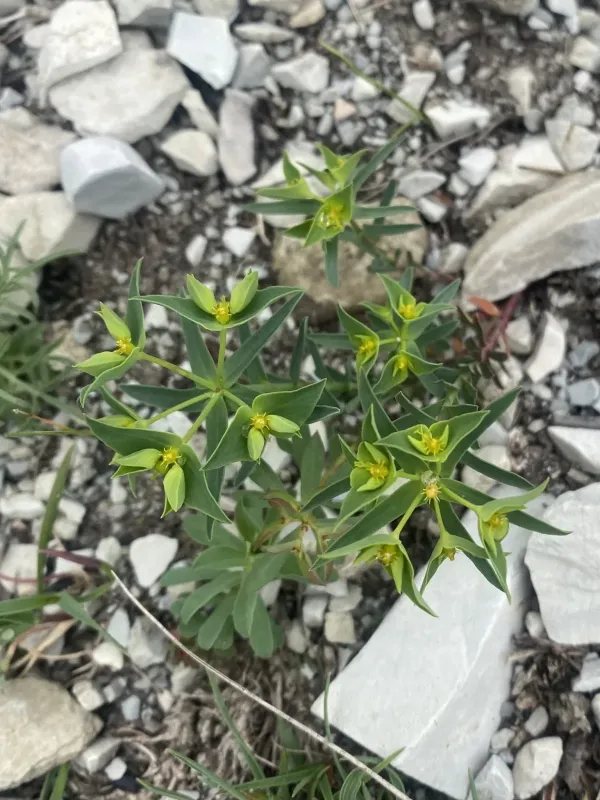
Euphorbia taurinensis is a member of the Euphorbiaceae family, widely known as the spurge family. This annual herbaceous plant is primarily found across the Mediterranean region, Central Europe, and parts of the Caucasus, demonstrating high adaptability to arid and semi-arid climates.
The plant thrives in well-drained, porous soils, often colonizing stony slopes, steppes, and pastures. Its root system is designed for efficient water uptake in environments where moisture is a limiting factor during the peak of the summer season.
Botanically, it is defined by an upright stem, lanceolate leaves, and the characteristic cyathium inflorescence unique to the Euphorbia genus. A defining feature is the presence of white, viscous latex, which serves as a chemical defense mechanism against herbivores.
From an ecological standpoint, the plant behaves as a ruderal species. It leverages the early spring window for germination, allowing it to establish itself before summer drought conditions set in, often competing with agricultural crops for nutrients.
Its life cycle relies on seed production, with dispersal often aided by wind or incidental transport through agricultural machinery. Understanding its phenology is critical for managing its presence within modern cropping systems.
Main diseases and pests
Euphorbia taurinensis is susceptible to several fungal diseases, including powdery mildew, which can significantly inhibit its vegetative development under humid conditions. These infections act as natural checks on population expansion in dense clusters.
Various insects, particularly beetles from the Aphthona genus, have evolved to feed on spurge plants. These specialized pests can defoliate the plant, reducing its vigor, although it remains a resilient species in its native range.
In agricultural settings, the main challenge is the competition it imposes on staple crops. Due to the toxicity of the latex, the presence of this weed in pastures is problematic as it can lead to health issues in livestock if ingested in large quantities.
Control measures typically involve mechanical tilling and the application of herbicides specifically formulated to handle weeds in the Euphorbiaceae family. These interventions are most effective when executed before the plant reaches the seeding stage.
Effective management requires a combination of crop rotation, proper fertilization that favors the desired crop, and vigilant weed monitoring during the early developmental phases of the agricultural cycle to ensure long-term field productivity.