
Euphorbia tannensis
Euphorbia tannensis
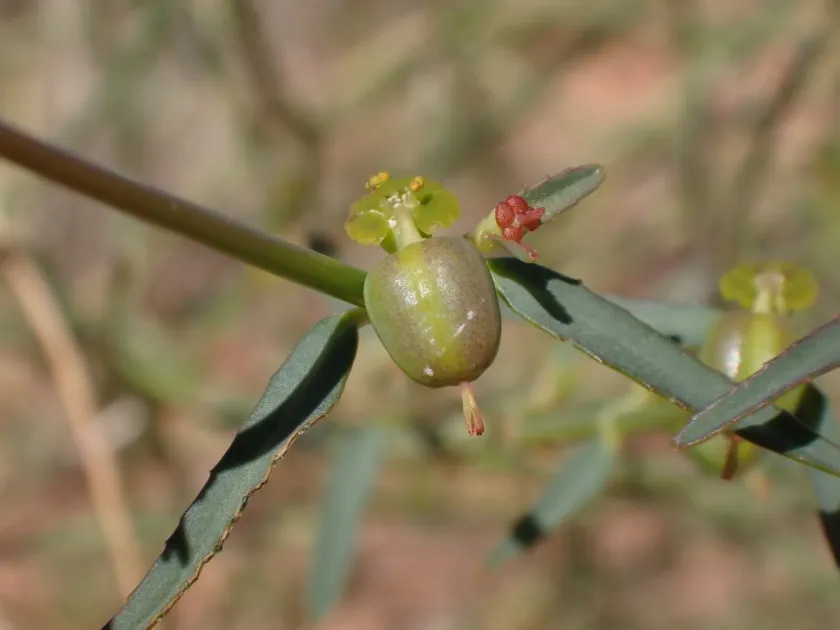
Description
Growing requirements
Euphorbia tannensis is a perennial herbaceous plant belonging to the diverse Euphorbiaceae family. Originating from the island of Tanna in the Pacific, this species is highly specialized for growth in dry, island-based environments.
Botanically, it functions as a semi-succulent shrub, capable of storing water in its tissues to survive extended dry periods. Its distinctive feature, like most members of the genus, is the white latex produced in stems and leaves when damaged.
The plant thrives in well-drained, nutrient-poor, and sandy or rocky soils. It is highly intolerant of waterlogged conditions, which can lead to rapid root decay, making soil selection the most critical step in cultivation.
Temperature requirements are strictly tropical; the plant does not tolerate frost or low temperatures. In an agricultural setting, it performs best in full sunlight, which is necessary to maintain its structural integrity and health.
Effective management involves minimal irrigation, only during extreme drought conditions. The plant's deep taproot allows it to tap into moisture stored deep within the soil profile, making it a low-input crop suitable for arid regions.
Main diseases and pests
Fungal pathogens represent the primary threat to the crop, particularly when ambient humidity is high. These infections often target the vascular system, resulting in plant wilting despite sufficient soil moisture.
Pests like mealybugs and spider mites are common in dry, warm climates. They create colonies on the stems and leaf undersides, extracting sap and causing leaf drop and general weakness of the plant.
Management of these pests requires integrated pest management strategies, focusing on early detection. Because of the toxic latex, the plant has a natural resistance to many generalist herbivores.
Sanitation practices are essential, including the removal of dead plant debris from the field to prevent the accumulation of fungal spores. Proper spacing is necessary to ensure good air circulation around the canopy.
Always exercise caution when working with Euphorbia tannensis, as the latex can cause severe skin and eye irritation. Protective gear should be worn during all agricultural activities, including pruning or harvesting.