
Euphorbia suzannae-marnierae
Euphorbia suzannae-marnierae
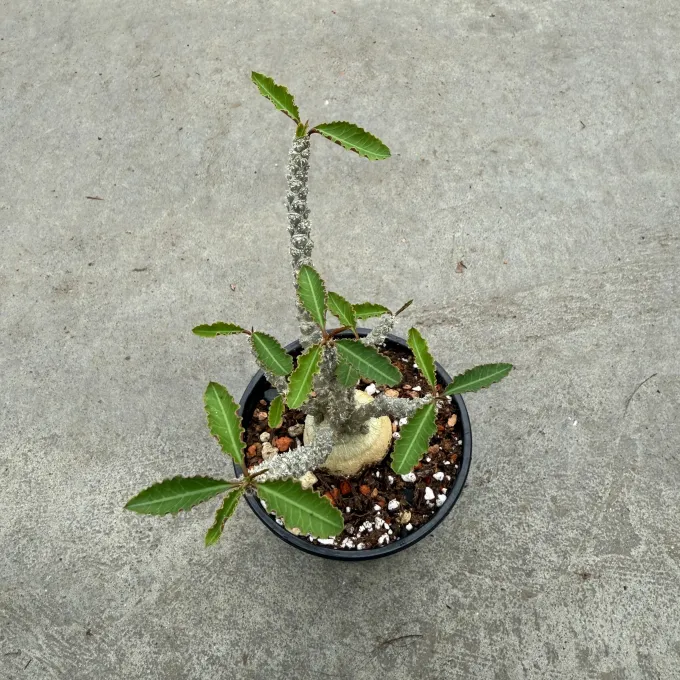
Description
Growing requirements
Euphorbia suzannae-marnierae is a highly specialized succulent species belonging to the Euphorbiaceae family. Originating from the rocky landscapes of Madagascar, this plant is valued by botanists and collectors for its distinct, architectural growth habit.
Botanically, this species is characterized by its succulent, branching stems that lack traditional leaves, relying instead on photosynthesis through the skin of its stems. The plant creates intricate patterns, making it a highly desirable subject for xeriscaping or greenhouse cultivation.
To cultivate this plant successfully, one must replicate its natural arid environment. It requires high light intensity for at least 6-8 hours daily to maintain its compact form and prevent etiolation, which is the most common developmental disorder in indoor environments.
The substrate must be exceptionally well-draining, consisting primarily of mineral components like pumice, volcanic rock, or sharp sand. Organic matter should be kept to a minimum, as high nutrient levels can lead to rapid, weak growth that makes the plant prone to collapse.
Watering management is the cornerstone of its agricultural technology. The plant enters a dormant phase during winter, during which water should be withheld almost entirely to prevent root rot, while summer watering must be precise, ensuring total drying between cycles.
Main diseases and pests
The most significant threats to Euphorbia suzannae-marnierae are fungal pathogens, specifically those causing basal rot when the plant is kept in damp, humid conditions. Preventive measures include ensuring proper airflow around the stems at all times.
Common pests include mealybugs, which tend to congregate in the crevices of the succulent stems, and spider mites. Effective management involves mechanical removal using alcohol-soaked swabs or the application of specialized systemic insecticides during the growing season.