
Furrowed spurge
Euphorbia sulcata
Description
Growing requirements
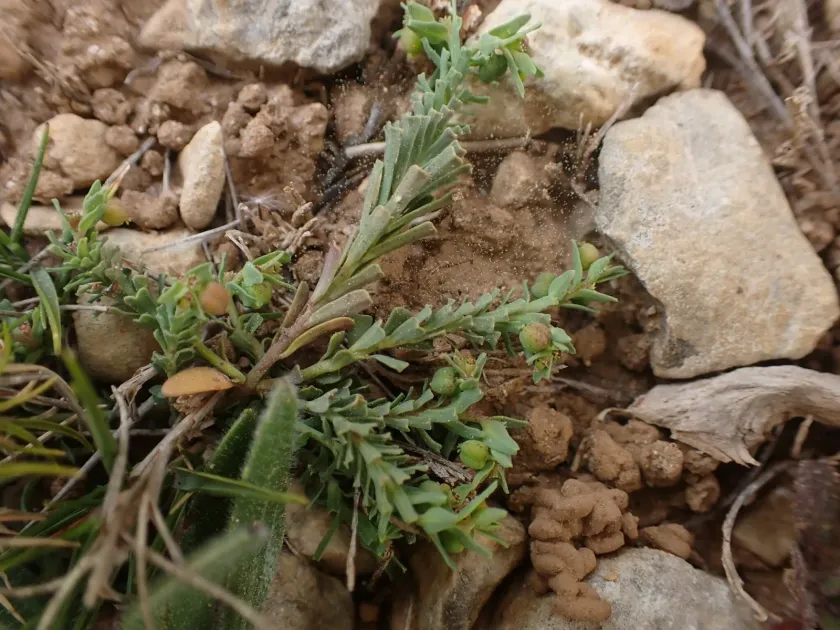
Euphorbia sulcata, commonly known as furrowed spurge, is an annual herbaceous plant belonging to the Euphorbiaceae family. It is native to the Mediterranean basin, where it thrives in arid environments, rocky hillsides, and disturbed soils that characterize its natural distribution area.
The plant is anatomically distinguished by its characteristic furrowed stems and milky white latex, which contains secondary metabolites common to the genus. Its growth cycle is strictly adapted to Mediterranean climate patterns, emphasizing rapid development during spring months.
Regarding soil requirements, this crop favors well-drained, sandy, or rocky soil substrates with neutral to slightly alkaline pH levels. Poor drainage is the most significant limiting factor, as it consistently leads to root rot and failure in establishing a healthy crop population.
Temperature management is crucial, as Euphorbia sulcata requires warm conditions and high light intensity to maximize its potential. It is highly susceptible to frost, making it unsuitable for cultivation in temperate zones without significant climate control interventions.
In agricultural practice, sowing should occur after all risks of frost have passed. Providing adequate spacing is essential to encourage air circulation, which prevents the development of fungal infections that are often associated with high density plantings in humid microclimates.