
Upright spurge
Euphorbia stricta
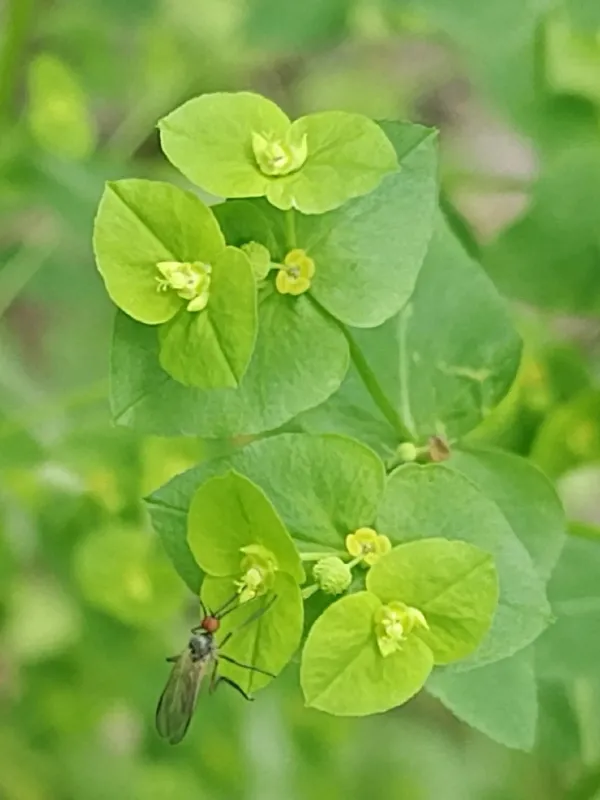
Description
Sowing dates
Upright spurge is an annual herbaceous plant that primarily reproduces via seed dispersal. Germination typically begins in early spring as soil temperatures rise, following the thawing process.
Seedlings emerge rapidly under conditions of sufficient soil moisture and warming, often appearing in gaps between crop rows. The plant exhibits a vigorous initial growth phase.
Flowering occurs throughout the summer months, leading to a long maturation period for seeds. A single plant can produce a substantial amount of seeds that remain viable in the soil for several years.
Dispersal is largely facilitated by natural mechanisms, including wind and water runoff, allowing the weed to colonize new areas of a farm efficiently if not controlled early.
Agricultural management programs focus on early-season mechanical or chemical intervention to prevent the plant from reaching its seed-bearing maturity, which is crucial for long-term field maintenance.
Growing requirements
As a member of the Euphorbiaceae family, Upright spurge thrives in well-lit environments and is commonly found in disturbed soils, including field edges and agricultural landscapes.
The plant prefers fertile, moist, and well-drained soil types. It is sensitive to severe competition from dense crop canopies, which significantly suppress its development and seed production.
Optimal growth is typically observed in neutral to slightly acidic soils. It is moderately adaptable to different environmental conditions but performs best in temperate climates with regular rainfall.
Agronomic control involves maintaining high soil fertility levels for crops to outcompete weeds and employing regular cultivation practices to uproot the plants before they become established.
Proper field rotation and the use of competitive cover crops are highly effective strategies to limit the prevalence of Upright spurge in integrated farming systems.
Main diseases and pests
Like many plants within the Euphorbia genus, it contains a milky latex that acts as a natural chemical defense against many common herbivores and insects.
Despite these defenses, it can act as a host for various pathogens, including rust fungi and certain viruses that can be transmitted to crops by insects feeding on the weeds.
Pest pressure is generally low compared to non-toxic weeds, but specialized insects or larvae may occasionally cause damage to the foliage during periods of environmental stress.
Disease management should focus on field sanitation and the removal of weed clusters that can harbor pathogens, potentially serving as a primary infection source for adjacent crops.
Regular scouting is recommended to ensure that any outbreaks of fungal or viral agents on weed populations are addressed before they bridge the gap to valuable agricultural production.