
Euphorbia squarrosa
Euphorbia squarrosa
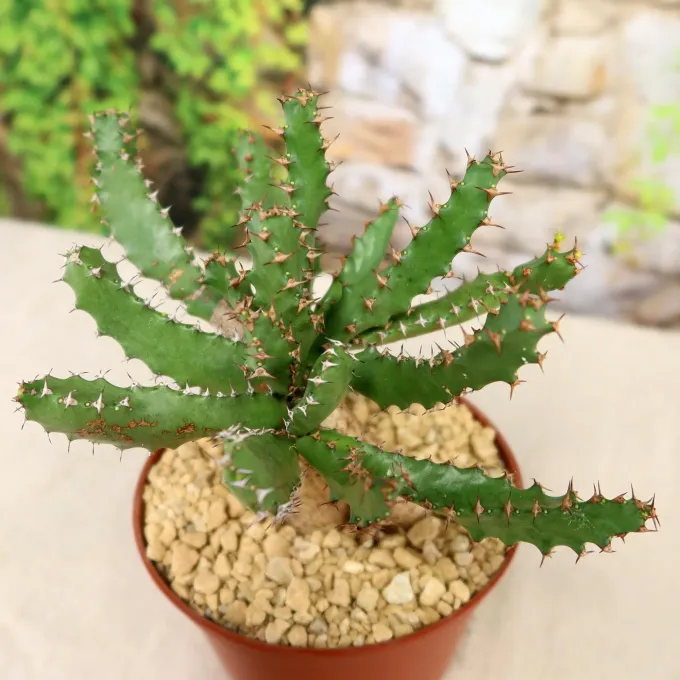
Description
Growing requirements
Euphorbia squarrosa is a fascinating caudiciform succulent belonging to the family Euphorbiaceae. Native to the arid landscapes of South Africa, this plant has evolved to store water within its thickened stem, allowing it to survive in harsh, rocky environments.
The plant features a distinct, swollen caudex that supports branching, spiny stems. Its leaves are small and often deciduous, falling off during periods of extreme dryness to minimize transpiration and conserve moisture.
Successful cultivation requires a highly porous, inorganic substrate. A mix consisting mainly of pumice, perlite, and coarse sand is ideal to ensure rapid drainage, as any water retention around the roots can lead to fatal complications.
Regarding light, this species demands high levels of brightness to maintain its compact, sturdy growth habit. In greenhouse settings, supplemental LED lighting is often necessary during the darker winter months to prevent etiolation.
Temperature management should follow the natural cycle of its habitat. During the active growing season, warm conditions are preferred, while the dormant winter phase requires cool, dry conditions to trigger proper rest and subsequent spring growth.
Main diseases and pests
The primary threat to Euphorbia squarrosa is root rot, which is almost exclusively caused by overwatering or poor drainage. Once internal tissue decay begins within the caudex, the plant is extremely difficult to save.
Mealybugs are the most common pests, often hiding in the crevices between the spiny stems. They can weaken the plant by sucking its nutrient-rich sap and creating sticky secretions that encourage sooty mold growth.
Pest management should be proactive, utilizing systemic insecticides or neem oil during the growing season. If a rot infection is detected, the affected area must be surgically removed with a sterile blade, and the plant should be left to callous before re-potting.
Handlers must exercise extreme caution due to the toxic milky latex found in all tissues of the plant. This sap can cause severe irritation to the skin and eyes, making the use of protective gloves a standard requirement during maintenance.
Maintaining proper airflow around the plant is critical. Stagnant air combined with high humidity levels creates an environment where fungal spores proliferate, posing a significant risk to the plant's overall health.