
Serrated spurge
Euphorbia serrata
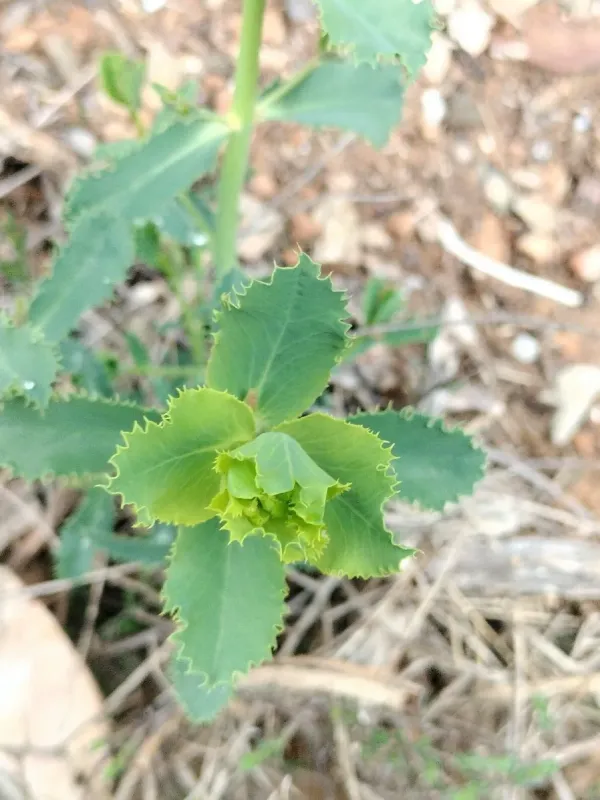
Description
Sowing dates
Serrated spurge (Euphorbia serrata) is a perennial herbaceous plant belonging to the Euphorbiaceae family. In agricultural practices, it is typically propagated by seeds. For successful cultivation, seeds should be sown in late autumn to benefit from natural stratification, which significantly improves germination rates in early spring.
When sowing in the spring, seeds require specialized treatment due to their innate dormancy. The optimal soil temperature for germination is between 12 and 15 degrees Celsius. Seeds should be planted at a shallow depth of 1-2 centimeters to ensure they emerge quickly and uniformly across the field.
Planting density depends on the specific end-use of the crop. A spacing of 40-50 centimeters between rows is recommended to allow for mechanical weeding and to ensure that each plant has sufficient access to nutrients and sunlight during its establishment phase.
As a perennial species, Euphorbia serrata requires a well-prepared seedbed. The initial growth phase is relatively slow, which makes the management of competition from weeds during the first year of production absolutely critical for high yields.
Field maintenance in the first year focuses on maintaining soil structure and preventing crust formation. Once the plants are established with a deep root system, they become highly competitive and require less intensive labor in subsequent growing seasons.
Growing requirements
This species is a quintessential xerophyte, perfectly adapted to arid and semi-arid conditions. Euphorbia serrata thrives in intense sunlight and can withstand prolonged periods of drought, making it an excellent candidate for cultivation in challenging environments where water is scarce.
The plant is not overly demanding regarding soil quality, but it requires excellent drainage. It performs best in sandy or stony, well-aerated soils. It is highly sensitive to waterlogging, which can cause root rot and significantly compromise the health of the entire crop.
The ideal pH range for serrated spurge is neutral to slightly alkaline. The plant has a high tolerance for calcareous soils, often found in Mediterranean regions, and can even thrive on limestone-derived substrates that are unsuitable for traditional agricultural crops.
Climatic requirements are focused on warm, dry summers and mild winters. While the plant can handle some cold, it does not survive well in regions with excessive moisture combined with freezing temperatures, which can lead to tissue damage.
Fertilizer requirements are low. Excessive nitrogen application should be avoided as it stimulates vegetative growth at the expense of secondary metabolites and can decrease the plant's natural resistance to environmental stress and common diseases.
Yield
The yield of serrated spurge is measured by the total biomass of dried aerial parts. Under optimal management conditions, a mature plantation can produce between 1.5 and 2.5 tons of dried matter per hectare, depending on local climate and soil fertility.
The concentration of latex and other bio-active compounds peaks during the full flowering stage. Therefore, planning the harvest date precisely is essential to maximizing the quality and commercial value of the produced raw material.
Second and third-year plants generally offer the highest yield potential. During this period, the plant has developed an extensive root system that supports robust vegetative growth, allowing it to produce maximum biomass compared to the initial establishment year.
Exposure to full sun is the most important factor in determining the quality of the yield. Plants grown in shaded conditions show significantly lower concentrations of desired chemical compounds, making site selection crucial for commercial success.
Yield stability is generally high due to the plant's hardiness. Once a stand is established, it can provide consistent yields for several consecutive years, provided that standard agronomic practices such as weed management and soil aeration are maintained.
Main diseases and pests
Euphorbia serrata is naturally protected against most herbivores by its toxic milky sap, which makes it resistant to many common agricultural pests. However, it is susceptible to specific fungal pathogens when grown in improper soil conditions.
Root rot, particularly when triggered by over-irrigation or poor drainage, is the primary threat. Pathogens like Fusarium species can colonize the roots rapidly, leading to the collapse of the plant and substantial loss of field productivity.
- Fusarium root rot;
- Powdery mildew under humid conditions;
- Rust diseases of Euphorbia;
- Spider mites in prolonged hot, dry spells;
- Nematodes in degraded or exhausted soils.
Integrated Pest Management (IPM) strategies are recommended. Crop rotation is essential, and the plant should not follow other members of the Euphorbiaceae family to minimize the buildup of soil-borne pathogens in the cultivation area.
Regular field scouting is necessary to detect early signs of disease. Removing and safely disposing of affected plants helps to prevent the spread of infections across the field, maintaining the overall health and vigor of the spurge plantation.
Harvesting
Harvesting is typically done using mechanical cutters. The plants are cut at a height of approximately 10-15 centimeters above the ground. This ensures that the root system remains intact, allowing the crop to regenerate for future harvests.
Immediate processing after harvest is vital. The biomass should be transported to drying facilities as quickly as possible to prevent degradation. Controlled drying at moderate temperatures (40-50°C) is preferred to preserve the integrity of the secondary metabolites.
Safety is a major concern during harvest. The sap of the serrated spurge is caustic and can cause severe skin irritation and ocular damage. Workers must be fully equipped with protective gear, and automated equipment is highly recommended to minimize human contact.
Proper storage of the dried product is essential for quality control. The material must be stored in a dry, cool environment protected from light to prevent oxidation of the essential components and to keep the product free from mold growth.
Post-harvest logistics should be streamlined to reduce the time between cutting and drying. By keeping this window short, producers can ensure the highest concentration of active ingredients and comply with quality standards for the pharmaceutical or industrial markets.