
Matted sandmat
Euphorbia serpens
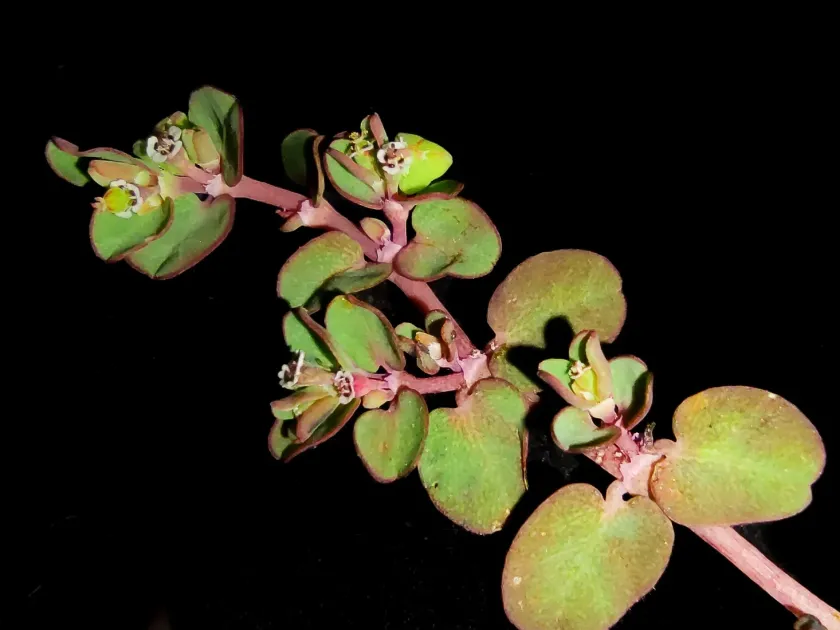
Description
Growing requirements
Matted sandmat (Euphorbia serpens) is a member of the diverse Euphorbiaceae family. It is a prostrate, mat-forming perennial herb that is widely recognized as a resilient and opportunistic species in various agricultural environments.
Originating from tropical America, it has naturalized extensively across temperate and tropical zones worldwide. It prefers open, sun-drenched environments and is commonly found in arable fields, pastures, and along infrastructure corridors.
Botanically, the plant is characterized by its creeping stems that often root at the nodes. The leaves are small, opposite, and smooth, which are adaptations that minimize water loss in high-temperature environments.
This species is highly adaptable to a wide range of soil textures, ranging from sandy to compacted heavy clays. It exhibits remarkable drought tolerance, allowing it to survive periods of limited rainfall that would negatively impact more sensitive crops.
Agricultural management is challenging due to the plant's prostrate growth habit, which allows it to thrive underneath standard cutting equipment. Its ability to regenerate from small stem segments makes soil disturbance a potential vector for further infestation.
Main diseases and pests
The plant possesses a milky latex sap, which contains compounds that discourage many common herbivores, contributing to its status as a highly competitive and persistent weed in managed landscapes.
The primary economic threat to agriculture is the competition for nitrogen, phosphorus, and moisture. By forming dense mats, it directly limits the space available for crop germination and subsequent growth, leading to reduced overall yields.
While the plant is generally hardy, it can indirectly facilitate the spread of root-knot nematodes in the soil. Furthermore, the dense canopy it creates can increase local humidity, potentially favoring the development of fungal infections in neighboring cash crops.
Few insect pests successfully colonize Euphorbia serpens due to its chemical defenses, meaning natural biocontrol is rarely effective. Management typically requires an integrated approach that includes competitive planting and strategic herbicide application.
Chemical control strategies often involve the use of systemic herbicides applied during the plant's active growth phase. Because of the waxy cuticle on its leaves, the use of surfactants is essential to ensure adequate penetration and efficacy of the treatment.