
Euphorbia sepulta
Euphorbia sepulta
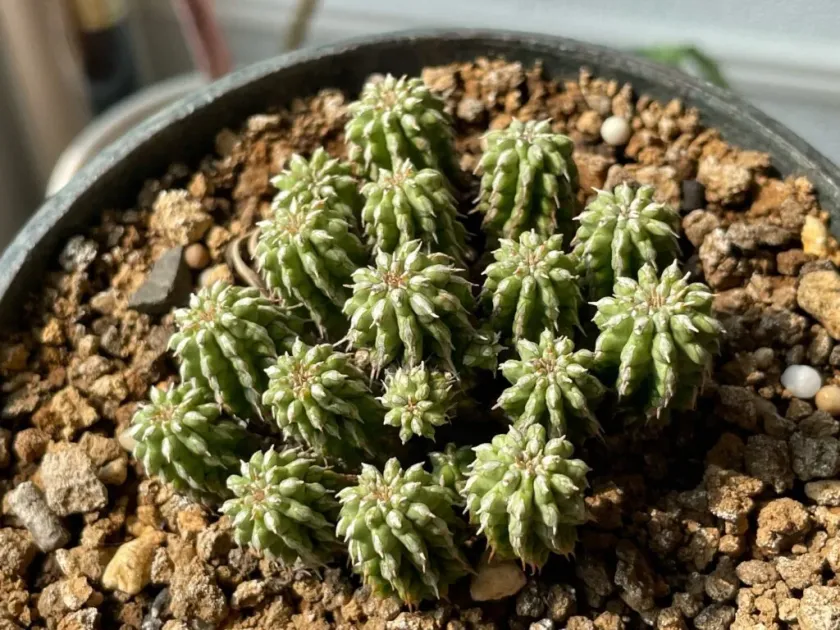
Description
Growing requirements
Euphorbia sepulta belongs to the Euphorbiaceae family and represents a specialized group of geophytic succulents. This plant is evolutionarily adapted to survive in the arid environments of the Horn of Africa, particularly in Somalia.
The core botanical feature of this species is its burial behavior. The plant grows largely below the soil surface, exposing only its upper parts to photosynthesis, which serves as a protective mechanism against extreme thermal radiation.
Agronomic success depends on high-drainage substrates, typically consisting of volcanic grit, sand, and pumice. Standard potting soils should be avoided, as they retain moisture that inevitably leads to root rot in this species.
Temperature and light are critical environmental parameters for Euphorbia sepulta. It requires high intensity, full spectrum light to maintain its compact growth form and high ambient temperatures throughout its active growth phase.
Economic and research utility includes its role in desert plant conservation and its usage as a genetic resource for xerophytic breeding programs. Its rarity makes it a prized subject for specialized botanical collections worldwide.
Main diseases and pests
Root rot caused by overwatering is the primary threat to the health of Euphorbia sepulta. Water must be applied sparingly, allowing the substrate to dry out completely between irrigation events to simulate natural rainfall patterns.
Mealybugs are the most common insect pests, often hiding in the crevices of the plant's surface. Routine inspection and the application of appropriate systemic insecticides can prevent infestations from overwhelming the plant.
Spider mites can become problematic in low-humidity indoor environments. Maintaining moderate air circulation and checking for signs of chlorosis or webbing helps mitigate the risk of these arachnids.
Fungal infections often follow physical damage to the epidermis. Any mechanical injury must be treated with antiseptic powders or sulfur to prevent the spread of pathogens into the succulent tissues.
Poor ventilation can lead to an accumulation of humidity, which promotes the growth of mold and mildew on the soil surface. Improving airflow around the plant is an essential preventative maintenance measure.