
Euphorbia schinzii
Euphorbia schinzii
Description
Growing requirements
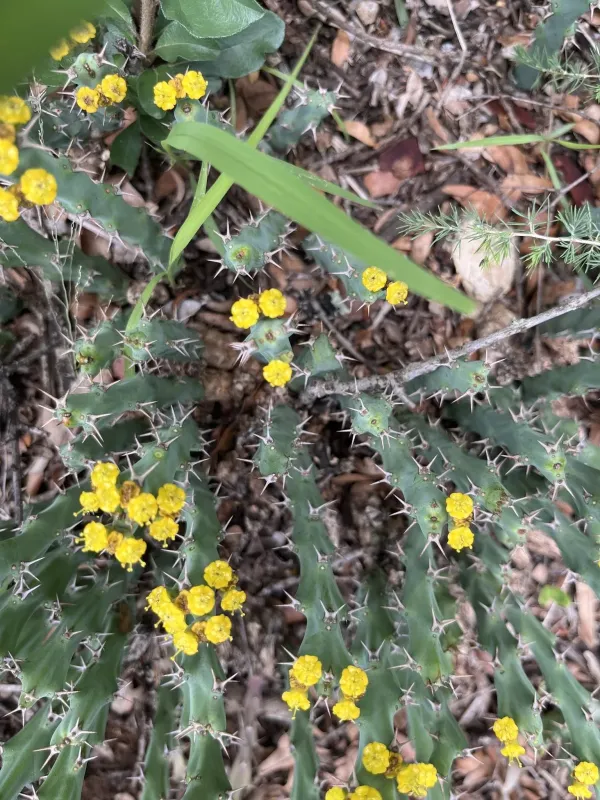
Euphorbia schinzii is a perennial succulent belonging to the Euphorbiaceae family, native to the rocky landscapes of Southern Africa. This species has evolved to thrive in arid environments, characterized by its distinct multi-stemmed growth pattern and low moisture requirements.
In terms of cultivation, the plant demands high levels of natural light. It is ideal for greenhouse conditions or sun-drenched windowsills, as adequate UV exposure is essential to maintain the structural integrity and compact form of the stems.
The substrate must be extremely well-draining, typically consisting of a mix of coarse sand, perlite, and a small portion of mineral-rich soil. Avoiding heavy or peat-based mixes is crucial, as they retain too much water and can lead to immediate root decay.
Temperature management follows a strict seasonal cycle. During the growing season, it prefers warmth between 20°C and 30°C. In the dormant winter season, a significant reduction in temperature and almost total cessation of watering are required for the plant's health.
While not a traditional industrial crop, Euphorbia schinzii is highly valued in the nursery trade for its sculptural appearance. It serves as an ornamental specimen, popular among succulent enthusiasts who appreciate its resilience and minimalist aesthetic.
Main diseases and pests
Root rot is the most significant threat to Euphorbia schinzii, usually triggered by overwatering during the dormant phase. Once the roots are compromised, the decay often spreads upwards to the base of the stems, making recovery difficult.
Pests like mealybugs represent a persistent challenge, often congregating in the crevices between the ribs of the succulent stems. Manual removal combined with systemic insecticides is the standard procedure for control.
Spider mites can also cause damage if the ambient air is stagnant and consistently dry. These pests create microscopic injuries on the epidermis, which can lead to unsightly scarring and weaken the plant's resistance to pathogens.
Over-fertilization with nitrogen-heavy products can result in "etiolation," where the plant grows too quickly, producing soft tissues that are prone to breakage and more susceptible to pest infestations.
Like many members of the genus, this plant exudes a milky latex that is highly toxic and irritating to the skin and eyes. Careful handling and the use of protective gloves are necessary whenever pruning or repotting the plant.