
Euphorbia ritchiei
Euphorbia ritchiei
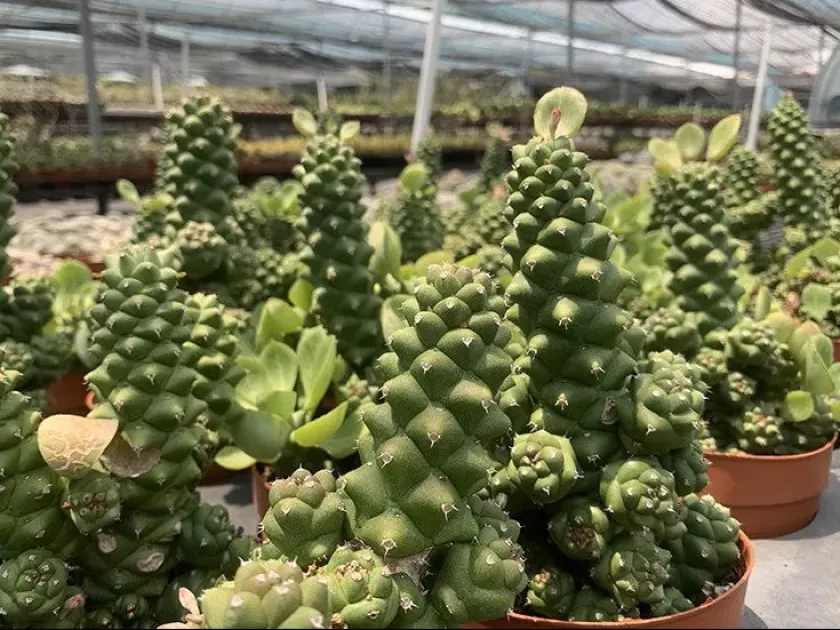
Description
Growing requirements
Euphorbia ritchiei is a fascinating succulent species belonging to the Euphorbiaceae family. Originating from the arid landscapes of Kenya, it has evolved to thrive in environments with limited water availability and intense light.
The plant is known for its distinctive segmented, succulent stems that create a column-like structure. This plant is highly prized by collectors for its architectural form and resistance to harsh environmental conditions.
Regarding light requirements, this species demands high intensity. Full sun or very bright indirect light is essential to maintain the plant's compact form and deep coloration throughout the growing season.
The soil should be well-draining, mimicking the rocky or sandy soils of its native habitat. A mix consisting of standard potting soil, volcanic rock, and coarse sand provides the necessary aeration for roots.
Watering must be approached with caution. During the active growth phase, water sparingly once the soil has dried out completely. In winter, maintain a dry substrate to prevent root rot during the dormant stage.
Main diseases and pests
The primary threat to Euphorbia ritchiei is overwatering, which quickly leads to fungal infections. Root and stem rot are the most frequent causes of plant death in cultivated specimens.
Mealybugs are common pests that target the crevices between the stem segments. These insects feed on the plant's sap and can quickly spread throughout the plant if not addressed with appropriate contact insecticides.
Spider mites can also be problematic in environments with low humidity. They typically manifest as fine webbing and mottled patches on the surface of the succulent, weakening the plant's overall health.
Effective pest management involves regular inspections and the application of systemic treatments or insecticidal soaps. Careful monitoring is essential, as the succulent's dense stem structure provides many hiding spots.
Prevention is the best strategy for maintaining a healthy plant. Ensuring adequate airflow, maintaining moderate temperature, and avoiding wet stems will keep these potential issues at bay throughout the year.