
Euphorbia richardsiae
Euphorbia richardsiae
Description
Growing requirements
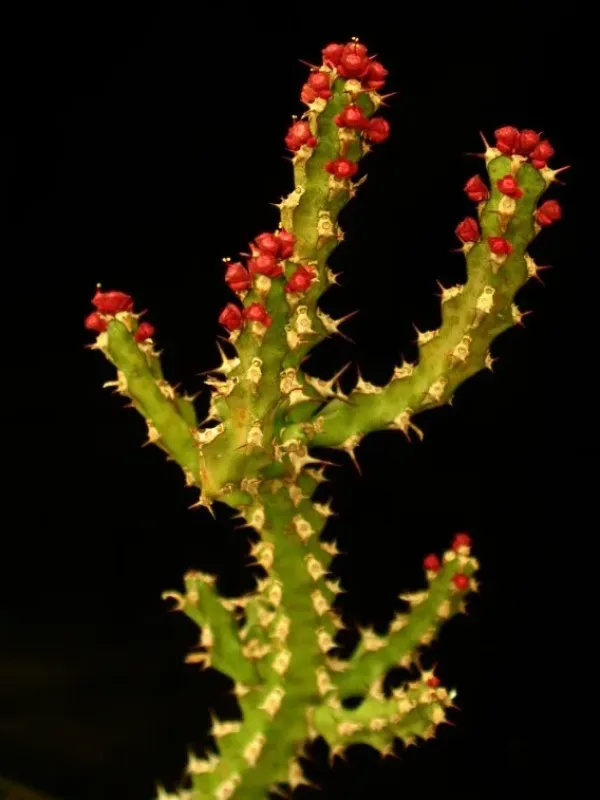
Euphorbia richardsiae is a distinctive succulent shrub belonging to the Euphorbiaceae family. Native to the arid regions of Southern Africa, this plant has evolved specialized morphological features to survive in extremely dry and harsh environmental conditions.
The cultural requirements for this species focus primarily on high light intensity. To maintain its compact growth form and prevent etiolation, it must be placed in a location receiving ample sunlight throughout the day, while ensuring adequate ventilation to prevent overheating.
Soil management is critical for the success of this crop. A highly porous, mineral-based substrate is essential, typically consisting of sand, perlite, and small gravel, which mimics the rocky terrain of its natural habitat and allows for rapid water drainage.
Irrigation strategy must follow the drought-tolerant nature of the plant. Water should be supplied sparingly during the growing season and strictly limited during the winter dormancy period to avoid root rot, which remains the primary threat to the plant's health.
Botanically, Euphorbia richardsiae displays a segmented stem structure designed to optimize water storage. As with other members of the genus, it exudes a white, irritating latex when damaged, which serves as a chemical defense mechanism against herbivores in the wild.