
King Juba's spurge
Euphorbia regis-jubae
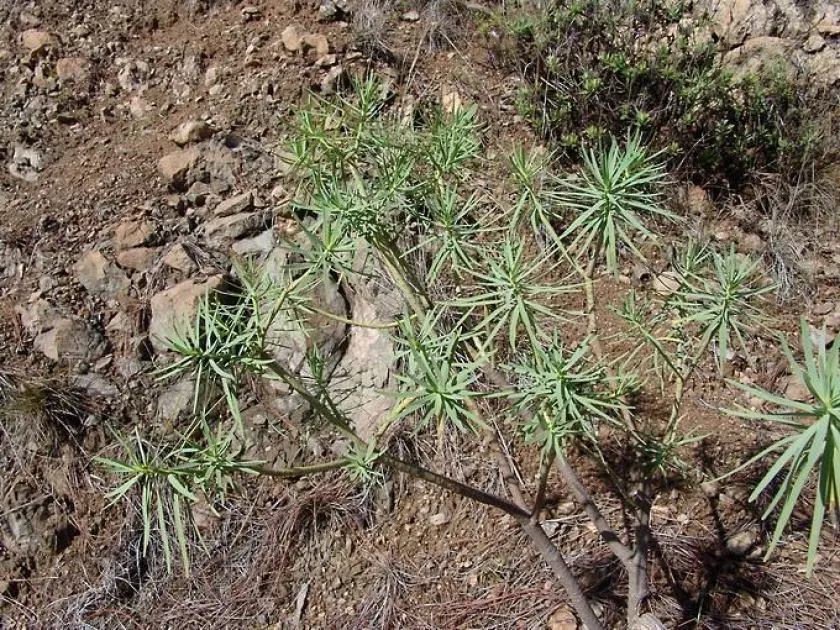
Description
Growing requirements
King Juba's spurge (Euphorbia regis-jubae) is an evergreen shrub belonging to the Euphorbiaceae family. It is native to the Canary Islands and parts of North Africa, where it thrives in rugged, arid landscapes and rocky slopes.
The plant is a classic xerophyte, well-adapted to environments with intense sunlight and prolonged water scarcity. In an agricultural setting, it requires a position with full sun exposure to maintain its compact growth habit and proper physiological function.
Regarding soil requirements, the species demands highly permeable substrates. Sandy or gravelly soils with excellent drainage are essential to prevent root rot, which is the most significant factor affecting the longevity of these shrubs.
Climatic conditions for optimal growth are restricted to frost-free environments. While the plant can tolerate short periods of heat, it is highly sensitive to freezing temperatures, necessitating greenhouse protection in temperate regions during winter.
Cultural practices involve minimal irrigation, with a specific focus on allowing the soil to dry out significantly between watering events. Fertilization should be kept to a minimum, using low-nitrogen succulent formulations to encourage steady, natural growth rates.
Main diseases and pests
The primary pathological threats to Euphorbia regis-jubae are soil-borne fungi, such as Phytophthora and Pythium species. These organisms thrive in overly saturated substrates and directly compromise the root integrity, leading to rapid plant decline.
Insect pests, particularly spider mites and mealybugs, are common challenges in cultivated populations. These pests thrive in dry environments and can cause significant damage to the succulent leaves and stems if left uncontrolled.
Integrated pest management strategies should emphasize sanitation and environmental control. Ensuring proper airflow and strictly avoiding excessive watering are the most effective preventative measures against both fungal pathogens and opportunistic pests.
If chemical intervention becomes necessary, systemic insecticides and fungicides should be used in accordance with safety guidelines. It is imperative to perform spot treatments only when infestations are localized to prevent unnecessary chemical exposure.
Safety is paramount when handling this crop, as the plant produces a caustic white latex. This sap contains toxic compounds that can cause severe irritation to the skin and eyes, requiring the use of protective gloves and eyewear during all management activities.