
Glade spurge
Euphorbia purpurea
Description
Growing requirements
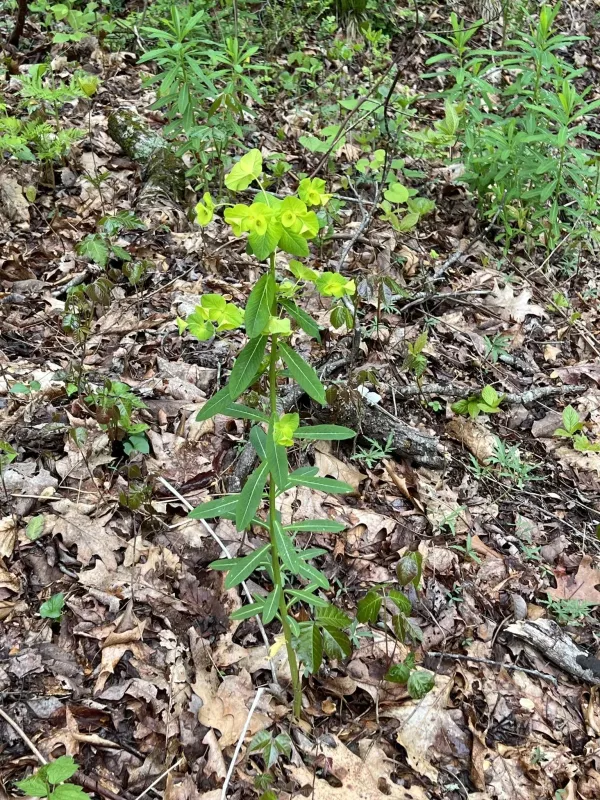
Glade spurge (Euphorbia purpurea) belongs to the Euphorbiaceae family. This perennial herb is native to the eastern United States, typically found in moist, deciduous woodlands and floodplains, exhibiting a high degree of habitat specificity.
The plant thrives in rich, well-draining soils that maintain constant moisture levels. While it tolerates a variety of conditions, it performs best in soils with high organic matter content and a neutral to slightly acidic pH level.
Climate requirements involve temperate zones with clearly defined seasonal changes. It prefers partial shade to filtered sunlight, making it suitable for woodland garden environments where soil moisture remains consistent throughout the summer.
Botanically, it is recognized by its unbranched stems and distinctive, dark purple to maroon floral bracts. These bracts provide a striking contrast against the dark green foliage during the late spring blooming period.
In terms of usage, it is primarily valued as an ornamental species. It serves as a vital component in native plant restoration projects and is often selected for its ability to stabilize soil in riparian landscapes.
Main diseases and pests
Root rot is the most significant threat to Euphorbia purpurea, typically induced by poor drainage and waterlogged soil conditions. This makes careful site selection and soil amendment critical for long-term health.
Powdery mildew can occur during periods of high humidity and limited airflow. Proper spacing between individual plants is recommended to facilitate air circulation and mitigate fungal outbreaks.
Pests such as aphids and spider mites may occasionally colonize the plant. Due to the caustic nature of the plant's milky latex, many generalist herbivores avoid it, though small sucking insects remain a challenge.
Care should be taken during pruning or harvesting, as the white latex sap can cause severe skin irritation and contact dermatitis. Protective gloves and long sleeves are strongly advised for gardeners.
Sanitation practices, including the removal of leaf litter around the base of the plant, are effective methods for preventing the overwintering of pests and spores that could compromise plant vigor.