
Cushion spurge
Euphorbia pulvinata
Description
Growing requirements
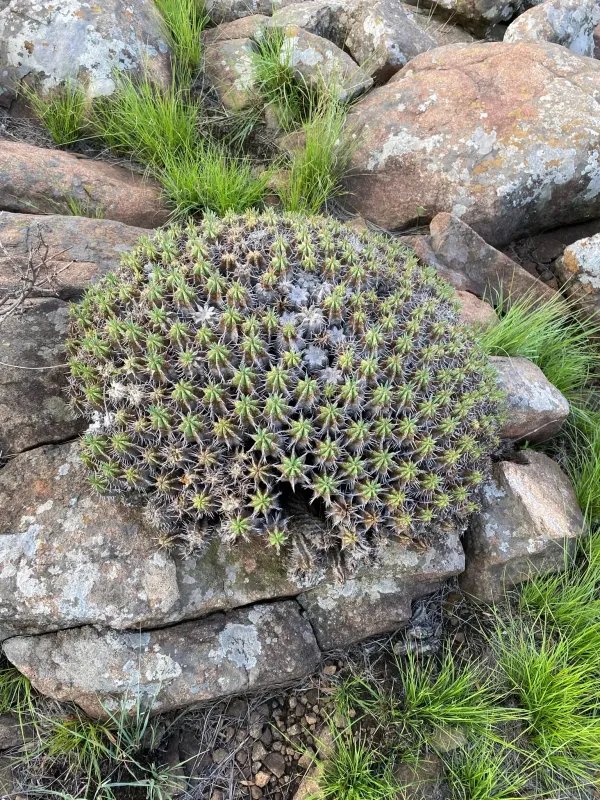
Cushion spurge (Euphorbia pulvinata) is a specialized succulent species within the Euphorbiaceae family. Native to the harsh environments of Southern Africa, it has evolved to thrive in rocky, arid landscapes where water is scarce and sun exposure is intense.
Successful cultivation requires a growing medium with excellent drainage properties, typically composed of coarse sand, perlite, and gravel. Poorly drained soil or heavy substrates will inevitably lead to root rot, which is the primary cause of plant loss in commercial settings.
The plant requires full sun to maintain its distinctive cushion-like habit and structural integrity. In greenhouse environments, high-intensity artificial lighting or direct sunlight is mandatory to prevent etiolation, where the plant stretches and loses its compact morphology.
Water management is the most critical aspect of the plant's agrotechnics. During the active growing season, watering should be sparse and only provided when the substrate has completely dried out. Fertilizer should be applied sparingly, favoring mineral blends designed for cacti and succulents.
Temperature control is essential as this species is not frost-tolerant. It should be maintained in a temperature range that mimics its natural habitat, avoiding cold drafts and humidity levels that exceed its physiological threshold for arid-adapted flora.
Main diseases and pests
The most significant threats to Euphorbia pulvinata are various forms of rot, primarily driven by overwatering or high humidity in poorly ventilated spaces. Keeping the base of the plant dry and ensuring air circulation are effective preventative measures.
Mealybugs and spider mites are the most persistent pests encountered in indoor or greenhouse cultivation. These organisms target the succulent tissues and can rapidly compromise the health of the plant if left untreated.
Effective pest management involves using targeted systemic insecticides. Application should be cautious to ensure that the milky latex, which acts as a natural defense mechanism for the plant, does not interfere with the absorption of protective chemicals.
Physical injuries to the stems provide entry points for fungal pathogens. If pruning or removal of offsets is required, it must be performed with sterile tools, and the exposed wounds should be allowed to callus over completely before watering.
Environmental stress, such as sudden shifts in light or temperature, can weaken the plant, making it more susceptible to opportunistic infections. Monitoring the plant's appearance for discoloration or softening of the stems is essential for early detection.