
Leafy spurge
Euphorbia pseudovirgata
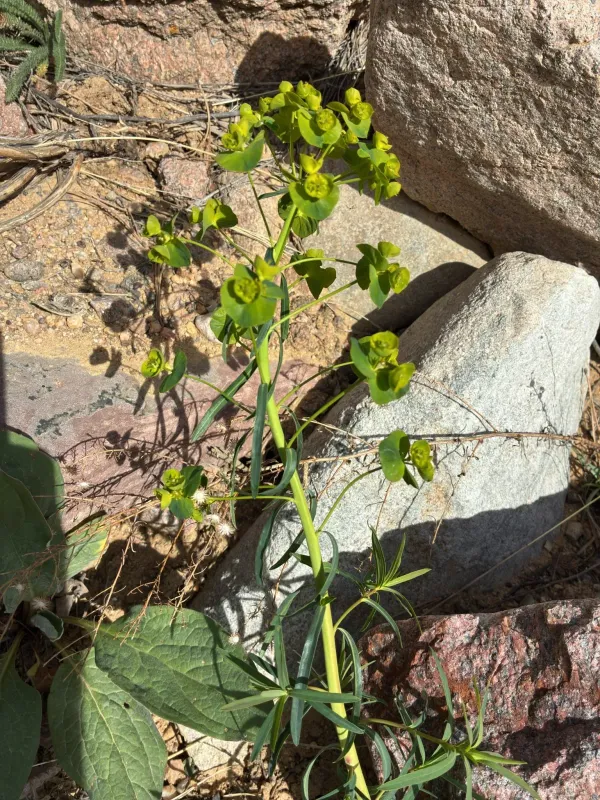
Description
Growing requirements
Leafy spurge Euphorbia pseudovirgata belongs to the Euphorbiaceae family. It is a highly persistent, deep-rooted perennial herbaceous plant that poses significant challenges in agricultural lands and pastures across temperate regions.
The plant originates from Eurasia and has successfully naturalized in various environments. It thrives in diverse soil types, ranging from sandy and rocky soils to heavy clays, demonstrating exceptional environmental plasticity and adaptability to drought conditions.
Botanically, it is characterized by an extensive root system that can extend several meters deep, allowing it to store large reserves of carbohydrates. The stems are erect and leafy, containing a milky latex that is toxic to many livestock, which reduces the grazing utility of infested pastures.
Climatic requirements for Leafy spurge are quite broad, as it is well-adapted to the temperate climate zone. It prefers sunny areas with moderate rainfall but can survive extreme weather fluctuations, making it a difficult competitor for native and cultivated species alike.
Agricultural management is complex because the species spreads through both seeds and a vigorous creeping root system. Its ability to regenerate from small root fragments makes traditional tillage techniques largely ineffective and often counterproductive for total eradication.
Main diseases and pests
Leafy spurge is susceptible to several fungal diseases, including rust species such as Uromyces. While these pathogens can damage the foliage and reduce photosynthetic capacity, they are rarely sufficient to control large, well-established infestations.
Insects that specialize on Euphorbia species, such as specific moth larvae or beetles, can cause localized damage. Integrated biological control programs have been implemented in some regions to introduce these natural enemies to suppress plant vigor.
Chemical control remains the most reliable method for managing this weed in industrial agriculture. Herbicides that translocate into the root system, such as systemic broad-spectrum herbicides, are typically applied during the blooming stage for the best efficacy.
Preventive measures are essential in areas where the weed is not yet established. This includes cleaning farm machinery, monitoring for new outbreaks in buffer zones, and maintaining competitive ground cover to prevent seed germination and seedling establishment.
Successful management requires a multi-year strategy, combining chemical treatments, controlled grazing with livestock that can tolerate the toxins (such as sheep or goats), and competitive cropping to gradually exhaust the plant's massive underground energy reserves.