
Euphorbia pseudoglobosa
Euphorbia pseudoglobosa
Description
Growing requirements
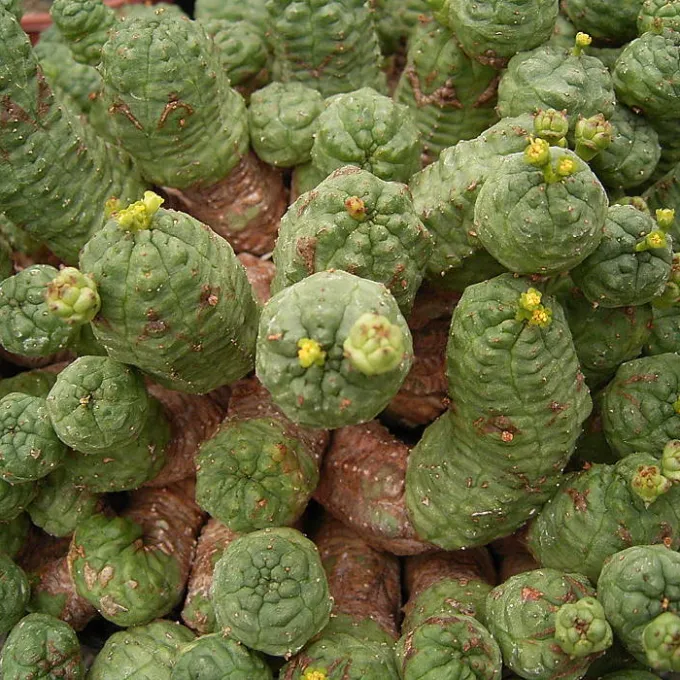
Euphorbia pseudoglobosa is a fascinating dwarf succulent species belonging to the Euphorbiaceae family. Native to the Cape Province of South Africa, it has evolved to thrive in arid environments, characterized by its distinctive segmented, globular growth habit.
The plant features small, spherical to elongated segments that are ribbed and typically marked with thorns. These segments serve as water storage organs, allowing the plant to survive prolonged dry spells in its natural habitat.
To cultivate this species successfully, a highly porous and well-draining soil mix is mandatory. A mixture containing coarse sand, pumice, and minimal organic matter is ideal to prevent root asphyxiation and rot.
Exposure to direct, intense sunlight is essential for maintaining the plant's compact form. When provided with optimal light, the epidermis often develops attractive purple or reddish hues, which are indicative of a healthy specimen.
Watering frequency should be minimal, especially during the winter dormancy period. Even in summer, the substrate must be allowed to dry out completely between waterings to mimic the natural wetting and drying cycles of the plant's environment.
Main diseases and pests
The primary threat to Euphorbia pseudoglobosa is waterlogging. Over-watering, especially in poor drainage conditions, quickly results in rot, which can destroy the succulent tissues starting from the roots or the base of the stem.
Mealybugs are a frequent pest for this species. They tend to infest the crevices between the succulent segments, making them difficult to detect and eradicate without focused application of systemic insecticides or contact sprays.
Spider mites represent another risk, thriving in hot and stagnant air conditions. Regular airflow and monitoring are key to preventing infestations that can cause unsightly scarring on the plant's skin.
Fungal infections can also occur if the humidity levels remain too high for extended periods. Maintaining excellent ventilation around the plant is a critical cultural practice to mitigate the risk of mold or mildew growth.
As with all members of the Euphorbia genus, the plant produces a white, milky latex sap that is toxic and irritating. It is highly recommended to wear gloves when handling the plant to avoid skin and eye contact with this sap.