
Euphorbia pseudocactus
Euphorbia pseudocactus
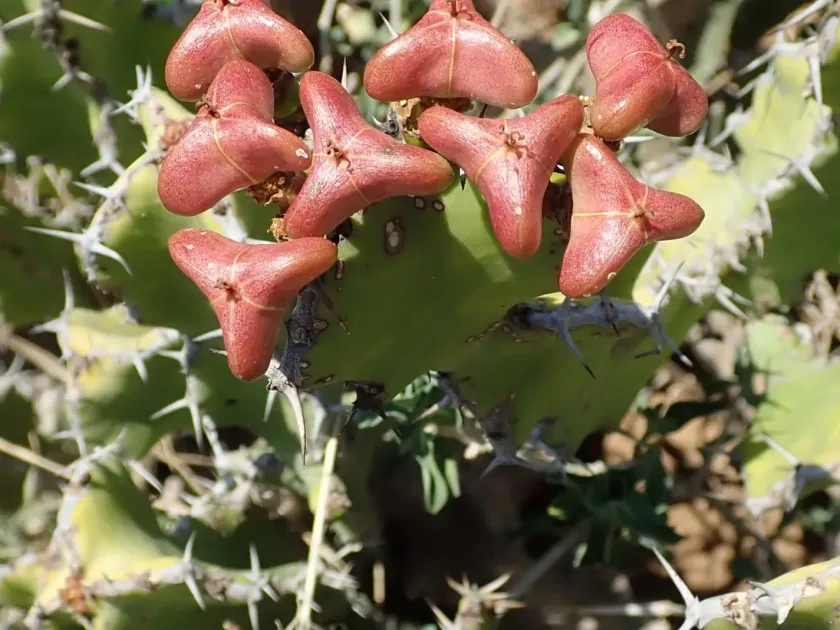
Description
Growing requirements
Euphorbia pseudocactus is a unique succulent shrub belonging to the Euphorbiaceae family. Originating from the arid regions of South Africa, it has evolved to thrive in environments with prolonged droughts and intense heat.
Botanically, it is classified by its cactus-like, segmented stems that feature prominent ribs and sharp spines. These physical adaptations serve as a strategy to minimize water loss and provide protection against herbivores, supported by a toxic, milky latex sap.
The culture requires high levels of solar radiation to maintain its compact, healthy growth habit. If the light intensity is insufficient, the stems will undergo etiolation, becoming thin and weak, which significantly reduces the plant's ornamental value.
Soil composition must prioritize drainage over water retention. A specialized potting mix for cacti and succulents, enriched with mineral components such as coarse sand, pumice, or perlite, is essential to prevent root asphyxiation and rot.
Agrotechnical management involves strict seasonal cycles. During the growing season, regular but sparse watering is required, allowing the soil to dry out completely. In winter, the plant enters dormancy and should be kept in a cool, dry environment with minimal irrigation.
Main diseases and pests
Root and stem rot remain the most critical threats to the health of Euphorbia pseudocactus. These conditions are predominantly caused by poor drainage or overwatering, especially during periods of low temperature or high humidity.
Pest infestations, particularly mealybugs and spider mites, are common in indoor collections. These pests thrive in dry air, hiding in the crevices between the ribs of the plant where they feed on the internal sap.
To maintain plant health, it is necessary to monitor for signs of pest activity, such as white web-like filaments or discolored spots on the stems. Early identification is crucial for effective intervention with biological or chemical treatments.
Handling the plant requires care due to its poisonous latex. Direct contact with skin can cause inflammation or allergic reactions, necessitating the use of protective gloves during any pruning or repotting procedures.
Implementing a preventive maintenance program, which includes air circulation and periodic inspection, is the most effective way to ensure the plant remains robust and resistant to standard fungal and insect attacks.