
Seaside spurge
Euphorbia polygonifolia
Description
Growing requirements
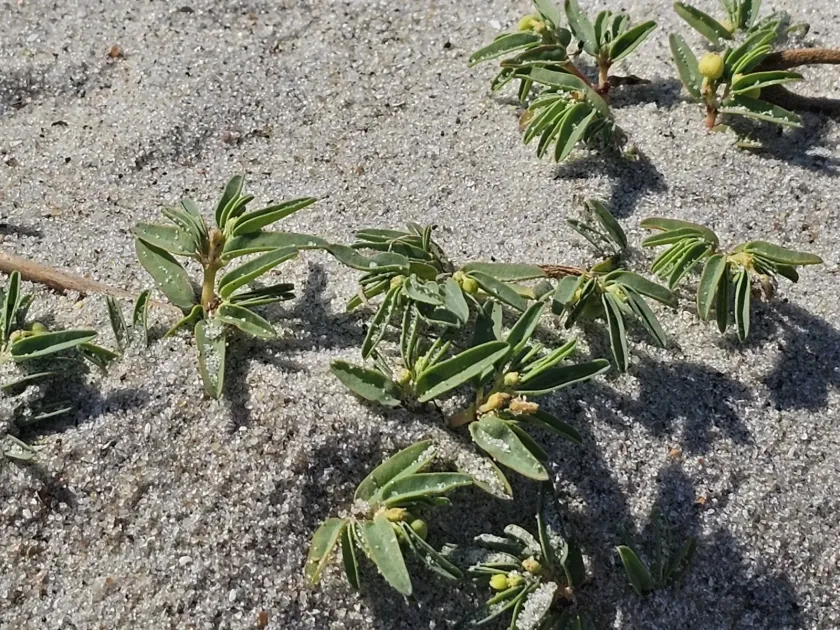
Seaside spurge (Euphorbia polygonifolia) is a herbaceous plant belonging to the Euphorbiaceae family. It is primarily known as a specialist of sandy coastal dunes and open habitats where it functions as a pioneer species.
The plant features prostrate, spreading stems and small, lanceolate or polygon-shaped leaves. Like other members of the Euphorbia genus, it contains a milky latex sap, which acts as a chemical deterrent against many potential herbivores and pathogens.
The cultivation of this species strictly requires well-drained, sandy soils with low nutrient content. It is extremely adapted to saline environments, making it an excellent candidate for coastal restoration projects where other crops fail to establish.
Climatic requirements are centered on full solar exposure. The plant cannot compete in shaded environments and thrives under high light intensity. It is heat-tolerant and resistant to the drying effects of coastal winds, which is crucial for its survival.
Economically, Seaside spurge is valued for erosion control. Its root system helps bind sand particles, stabilizing the substrate on dunes and sandy coastal areas, which provides significant ecological benefits in coastal management programs.
Main diseases and pests
Due to the presence of toxic compounds in its latex, the plant is naturally resistant to many common pests. Most insects avoid consuming the tissue, which reduces the need for insecticide application during its growth cycle.
Fungal pathogens represent the most significant threat to the plant, specifically when it is grown in areas with poor drainage. Root and stem rot are the typical symptoms of excessive soil moisture and lack of aeration.
While the plant is hardy, physical damage to the stems can facilitate the entry of pathogenic fungi. In controlled environments, it is essential to monitor soil moisture levels to ensure the substrate remains aerobic at all times.
Invasive weed species pose a major competitive threat. Because Seaside spurge is a low-growing plant, it is easily outcompeted for space and sunlight if tall-growing weeds are not regularly removed from the vicinity of the plant.
Maintenance of appropriate light levels and soil structure is the best preventive strategy against diseases. There is little information regarding specialized pest outbreaks, confirming its general resilience in its native ecosystem.