
Euphorbia polygona
Euphorbia polygona
Description
Growing requirements
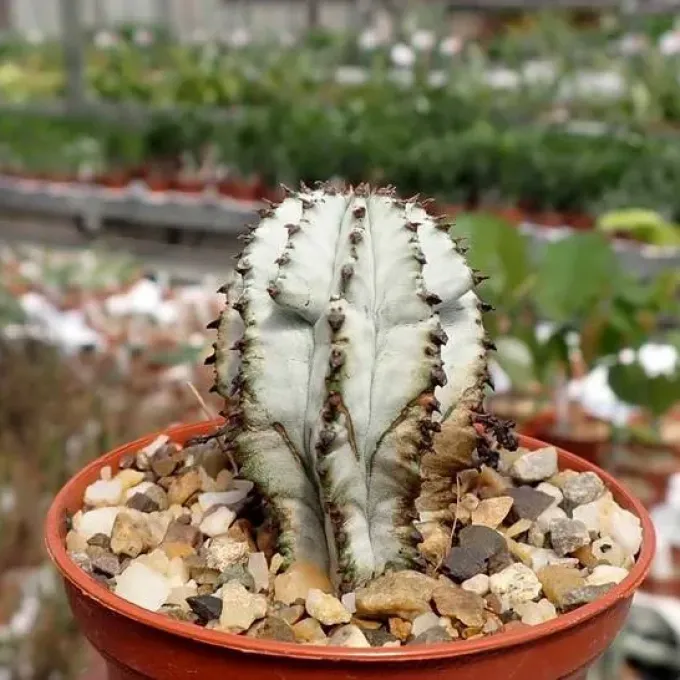
Euphorbia polygona is a distinguished species of succulent belonging to the Euphorbiaceae family. Originating from the arid regions of South Africa, this plant has adapted to survive in harsh, rocky environments, developing a robust, multi-ribbed stem architecture that serves as a water storage organ.
Botanically, it is defined by its compact, columnar growth form and distinctive surface texture. The stems often exhibit a subtle blue-grey bloom, which protects the plant from intense UV radiation. It is a slow-growing perennial that can form clusters over time in its natural habitat.
Successful cultivation requires a highly porous growing medium. A blend consisting of coarse sand, pumice, and limited organic matter is recommended to facilitate rapid drainage. Providing adequate aeration to the root system is the most critical factor for avoiding physiological stress.
This species demands high light intensity to maintain its characteristic structure. When kept in indoor environments or greenhouses, it should be placed in areas with unobstructed light. Insufficient light leads to etiolation, a condition where the stem stretches and becomes structurally weak.
The agronomic management of this culture involves distinct seasonal shifts. During the active growth phase, watering should be thorough but infrequent, allowing the substrate to dry completely between applications. During the dormant period, water intake should be significantly reduced.
Main diseases and pests
The primary threats to Euphorbia polygona are related to improper environmental control, particularly soil moisture management. Overwatering frequently triggers root rot and bacterial infections, which quickly penetrate the soft succulent tissues of the stem.
Pests such as mealybugs are a recurring concern, as they often hide deep within the ribs of the plant. Regular monitoring of the stem surfaces and crevices is essential to detect early infestations before they compromise the health of the entire plant.
Spider mites can become a significant issue during periods of low air humidity. These tiny pests cause scarring on the epidermis, which, while not always fatal, permanently diminishes the aesthetic value of the specimen.
Fungal pathogens may cause localized spotting or necrosis if the air circulation around the plant is stagnant. Ensuring good ventilation and keeping the surface of the plant dry are essential preventative measures against fungal outbreaks.
Nutrient imbalances, while less frequent, can manifest as chlorosis or stunted growth. Using specialized fertilizer formulated for succulents during the growing season helps sustain the plant’s vigor and bolsters its natural resistance to environmental pests and diseases.