
Euphorbia polyacantha
Euphorbia polyacantha
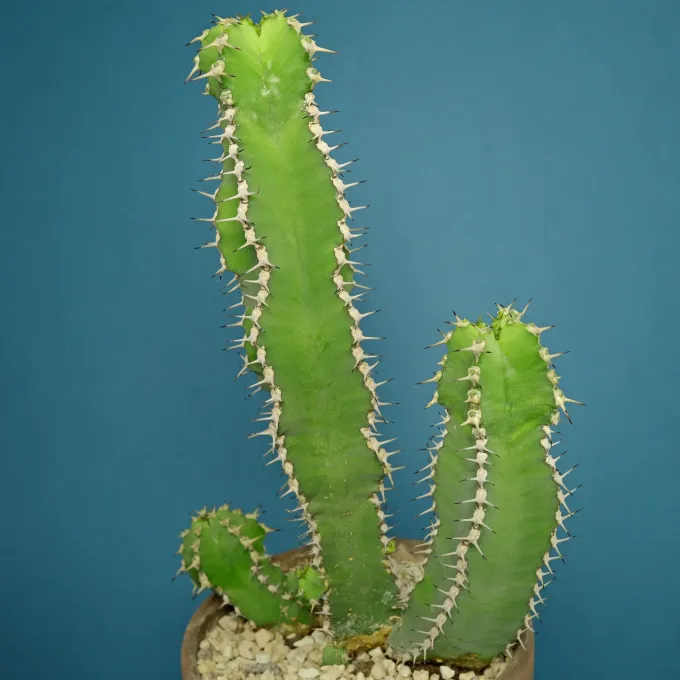
Description
Growing requirements
Euphorbia polyacantha is a species within the Euphorbiaceae family, recognized for its succulent nature and distinctive spiny growth. Botanically, it is classified as a stem-succulent adapted to survive in harsh, low-moisture environments, utilizing its thick tissues to store water.
Native to the arid zones of Ethiopia and surrounding regions, this plant thrives in environments characterized by high solar irradiance and significant diurnal temperature fluctuations. Agriculturally, it requires specific conditions to mimic its natural habitat to prevent physiological stress.
Soil requirements focus on mineral-rich, highly porous substrates. A mix of sand, gravel, and minimal organic matter is ideal for ensuring rapid drainage. The container or field site must have excellent aeration to avoid the accumulation of stagnant moisture near the roots.
Climate management involves maintaining high light levels throughout the year. During the winter months, the plant enters a period of dormancy, necessitating cooler temperatures and minimal to no irrigation to mirror the natural seasonal cycle of its native habitat.
The primary use of Euphorbia polyacantha is ornamental, serving as a focal point in xeriscape gardens, botanical collections, and glasshouse displays. Its resilience makes it a popular choice for sustainable landscaping in regions with Mediterranean-like climates.
Main diseases and pests
The most critical threat to Euphorbia polyacantha is root and stem rot. This is almost exclusively caused by overwatering or poorly draining substrates, which promote the growth of opportunistic fungal pathogens that decompose the succulent tissues.
Pests, particularly mealybugs and spider mites, are common nuisances in greenhouse environments. These pests congregate in the crevices between spines, making them difficult to detect and treat without specialized systemic applications.
Prevention involves ensuring proper spacing between plants to maximize airflow and maintaining a strict dry cycle in the root zone. Regular monitoring of the plant surface is essential for early detection of pest colonization.
When dealing with infestations, it is recommended to use specialized horticultural oils or systemic insecticides. Direct application to the affected areas is often necessary due to the plant's structural complexity caused by its numerous spines.
Maintaining biological hygiene is key; removing any dead or decaying tissue immediately helps prevent the spread of infections to healthy parts of the plant or nearby specimens in the collection.