
Euphorbia platyclada
Euphorbia platyclada
Description
Growing requirements
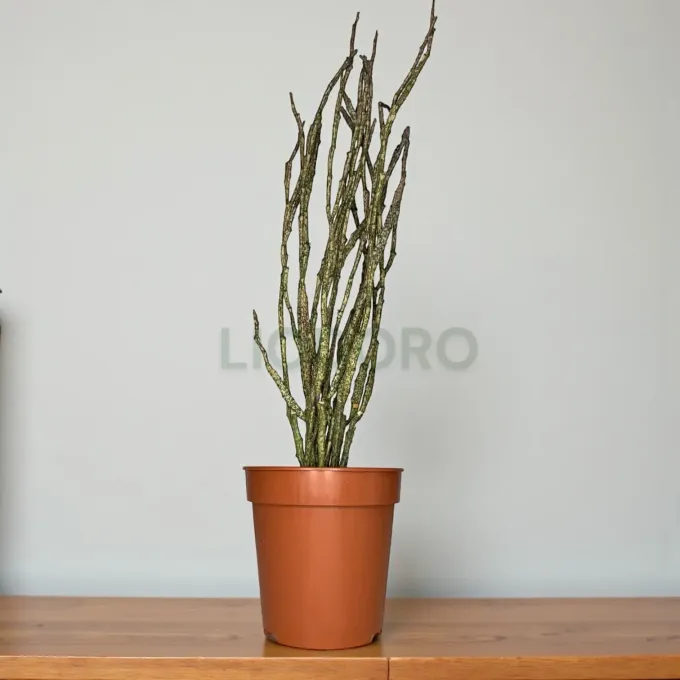
Euphorbia platyclada is a distinct species within the Euphorbiaceae family, native to the island of Madagascar. It is renowned for its unusual, skeleton-like appearance that makes it a prized specimen for succulent collectors.
The plant features flat, greyish-brown, leafless stems that branch out in a sprawling manner. This adaptation allows the plant to survive in its rocky and arid natural habitat on the island.
This succulent requires bright, indirect light to maintain its compact and distinctive structure. In low-light conditions, the stems tend to stretch and lose their typical flattened aesthetic.
A well-draining soil mix is mandatory. A standard mix for cacti and succulents, amended with pumice or perlite, ensures that the roots do not sit in damp soil, which is lethal for this species.
Temperature management is key; the plant thrives in warm summer conditions but requires a cooler dormant period during winter, ideally maintained at 12–15 degrees Celsius.
Main diseases and pests
Root rot is the most significant threat to the health of Euphorbia platyclada. This is almost exclusively caused by overwatering or poor drainage within the pot.
Pests like mealybugs can hide in the crevices of the flattened stems. Regular inspections are necessary to catch infestations early before they spread across the plant.
Spider mites are another common nuisance that can cause disfigurement to the epidermis of the stems, leading to weakened growth and susceptibility to pathogens.
As with most euphorbias, the plant contains a caustic, toxic white sap. Always wear gloves and eye protection when handling the plant during repotting or pruning tasks.
Maintaining proper air circulation around the plant helps reduce the risk of fungal infections, especially during the humid or colder months of the year.