
Phosphorescent spurge
Euphorbia phosphorea
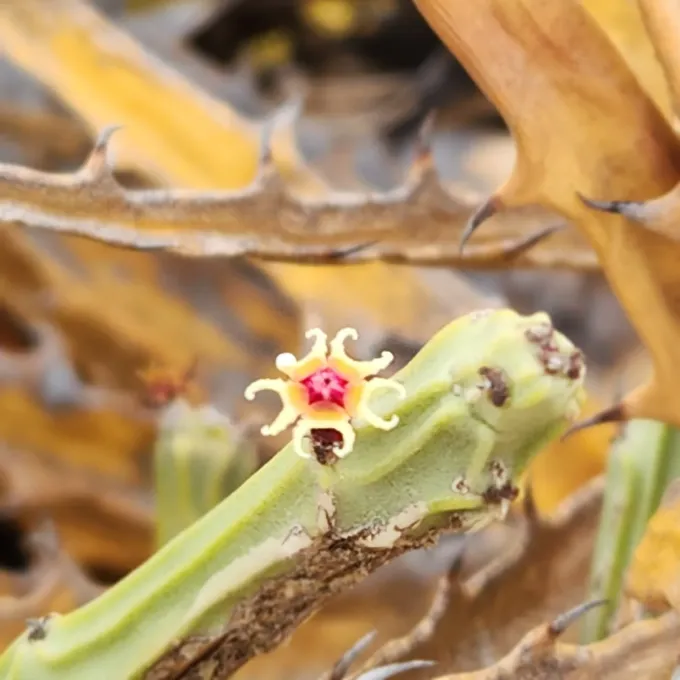
Description
Growing requirements
Euphorbia phosphorea, commonly known as the phosphorescent spurge, is a fascinating member of the Euphorbiaceae family. Originating from the arid regions of Brazil, this succulent shrub is well-adapted to surviving in environments with limited water availability through its specialized stem structure.
The soil requirements for this species are strict: it demands a highly permeable, gritty, and mineral-rich substrate. A standard cactus mix, amended with additional pumice or coarse volcanic sand, is ideal to prevent moisture accumulation around the delicate roots.
Regarding climate, the plant thrives in warm, dry environments. It requires a significant amount of bright, filtered sunlight to maintain its structural integrity. Total darkness or deep shade will cause the plant to etiolate, leading to stunted and misshapen growth patterns.
Watering frequency should be strictly regulated. During the active growth season, water should be applied only when the substrate has completely dried out. In the dormant season, water intake must be severely restricted to avoid physiological collapse and root decay.
Cultivation in greenhouse settings requires careful attention to airflow. Stagnant air combined with high humidity is highly detrimental, often triggering fungal outbreaks. Providing consistent ventilation is a fundamental requirement for the healthy development of this spurge.
Main diseases and pests
The primary threat to Euphorbia phosphorea is root rot caused by pathogens such as Phytophthora or Pythium. These occur almost exclusively due to overwatering or poorly drained growing media, leading to irreversible cell necrosis in the lower stems.
Mealybugs (Pseudococcidae) and spider mites are the most common insect pests. These pests hide in the crevices of the stems and are often difficult to detect until a significant infestation has occurred, weakening the plant's overall vigor.
Black spot or fungal spotting can appear on the epidermis if water remains on the stem surface for extended periods. This damage is often cosmetic initially but can lead to internal rotting if the skin barrier is compromised.
Integrated pest management should focus on maintaining hygiene in the cultivation area. Removing fallen debris and ensuring individual plants have enough spacing will significantly reduce the risk of cross-contamination between specimens.
Chemical treatments should be applied with caution. Since the plant is a succulent, certain solvents in pesticides can penetrate the waxy cuticle, causing phytotoxicity. Always test a small portion of the plant before applying any broad-spectrum treatment.