
Peruvian euphorbia
Euphorbia peruviana
Description
Growing requirements
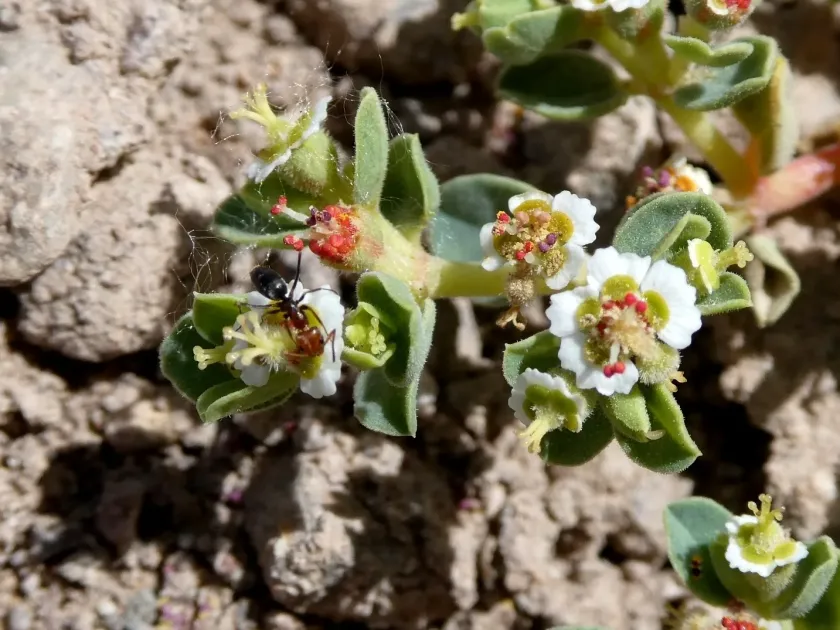
Peruvian euphorbia (Euphorbia peruviana) is a perennial succulent plant belonging to the Euphorbiaceae family. It is known for its structural, cactus-like appearance which allows it to thrive in arid environmental conditions.
Native to the dry regions of South America, particularly Peru, the species has evolved to tolerate intense solar radiation and prolonged drought periods. Its morphology is perfectly adapted to desert-like landscapes.
Soil requirements for this plant focus on excellent drainage. A substrate composed of coarse sand, perlite, and gravel is ideal to prevent moisture accumulation and root suffocation in the potting or planting mix.
The plant demands high exposure to natural light to maintain its compact habit. Inadequate sunlight leads to etiolation, causing the stems to stretch and weaken, eventually losing their natural structural integrity.
Temperature management is critical for the survival of Euphorbia peruviana. It requires warm climates and cannot withstand freezing temperatures, which can cause internal cell rupture and plant death.
Main diseases and pests
Common pests affecting this crop include mealybugs and spider mites. These small insects thrive in warm, dry environments and can cause significant damage if the plant's health is already compromised.
Root rot is the most destructive disease, usually resulting from over-irrigation or soil that remains damp for too long. Once internal tissues are infected, recovery is often difficult.
Monitoring for signs of tissue decay or pest infestations is essential. Early detection allows for the effective use of localized treatments before the infection spreads throughout the entire colony.
Due to the plant's succulent nature, applying chemicals must be done carefully to avoid phytotoxic reactions. Using systemic fungicides and pesticides is generally effective when applied correctly.
Maintaining a clean growing environment and ensuring sufficient space between plants promotes better airflow, which is a natural defense against the proliferation of fungi and pests.