
Euphorbia persistentifolia
Euphorbia persistentifolia
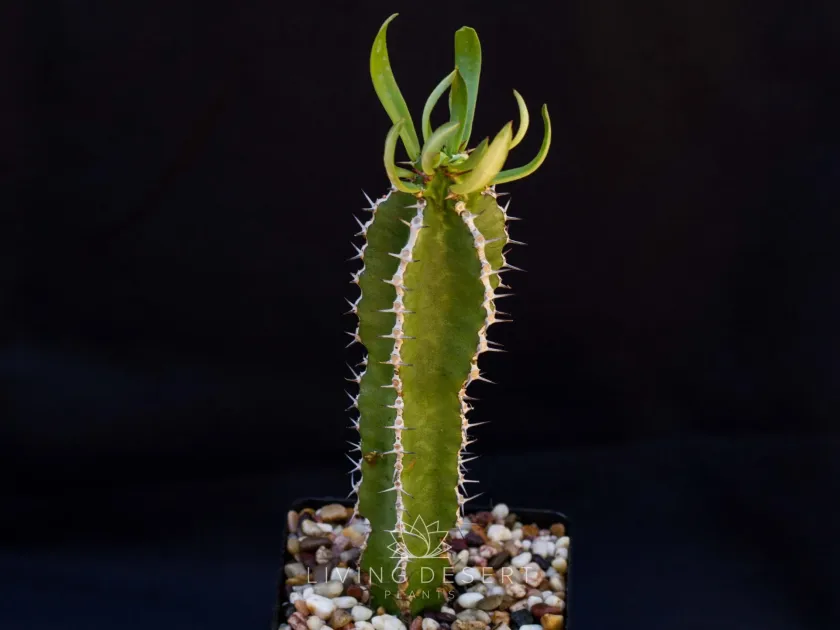
Description
Growing requirements
Euphorbia persistentifolia is a member of the Euphorbiaceae family. This perennial plant exhibits distinct succulent characteristics, which are evolutionary adaptations to survive in harsh, arid, and semi-arid environments.
The species originates from regions with significant moisture deficits, determining its preference for high solar radiation. It thrives in climates where thermal stress is high and rainfall is sporadic or seasonal.
Regarding soil requirements, this plant strictly needs well-drained substrates. Sandy or stony soils are ideal, as they prevent water accumulation around the roots, which is the primary cause of root rot in this genus.
The agrotechnology for this crop focuses on managing soil aeration and ensuring pH levels remain in the neutral range. Maintenance involves minimal fertilization, as the plant is adapted to nutrient-poor soils found in its natural habitat.
Its industrial potential lies in the composition of its latex and biomass, which are investigated for use in chemical manufacturing. It serves as a resilient crop candidate for diversifying agriculture in marginal, drought-prone lands.