
Euphorbia pentops
Euphorbia pentops
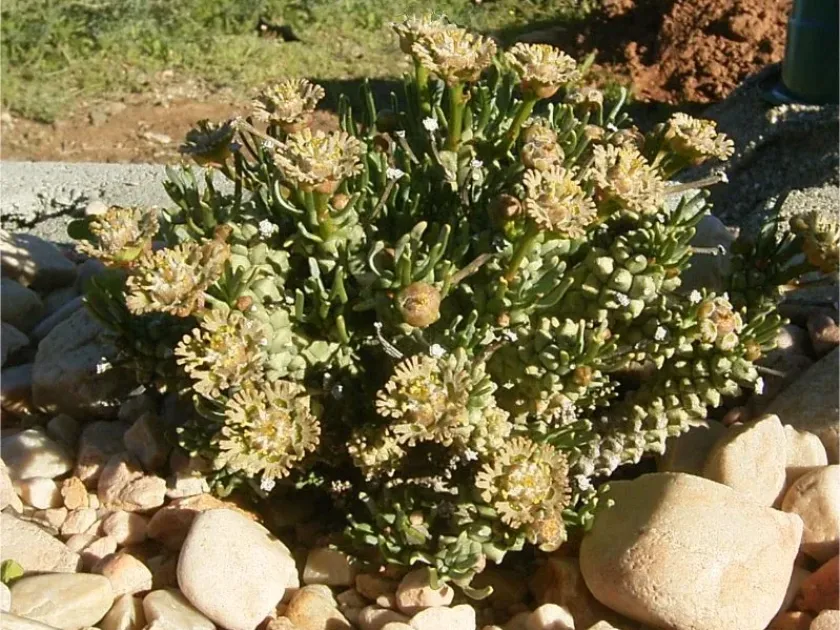
Description
Growing requirements
Euphorbia pentops is a remarkable succulent species belonging to the Euphorbiaceae family. Originating from the arid regions of Southern Africa, particularly Namibia, this plant has evolved specialized morphological adaptations to thrive in harsh, desert-like environments with irregular rainfall patterns.
Botanically, the plant is characterized by a succulent, thickened stem that acts as a primary reservoir for water storage. The exterior is often adorned with small scales or persistent peduncles, giving it a unique architectural appearance that is highly valued in horticulture and specialized plant collections.
Successful cultivation of Euphorbia pentops requires a well-draining substrate to mimic its natural mineral-rich, rocky habitat. A mixture composed of coarse sand, crushed volcanic rock, and minimal organic matter is ideal to prevent moisture retention around the root collar.
The species demands high levels of light exposure to maintain its compact growth habit and structural integrity. In an indoor or greenhouse setting, positioning the plants in direct sunlight or providing high-intensity grow lights is essential to prevent etiolation and structural weakness.
Climate management focuses on maintaining warmth during the active growing season. While the species is heat-tolerant, it requires a well-defined rest period during the winter months, where lower temperatures and reduced moisture intake help trigger its dormancy phase and long-term health.
Main diseases and pests
The primary threat to the health of Euphorbia pentops is root and stem rot, usually precipitated by improper irrigation practices. Maintaining a dry environment during the cooler months is critical to prevent the colonization of the roots by opportunistic fungal pathogens found in moist soil.
Pest pressures frequently include mealybugs and spider mites, which can easily infest the crevices of the succulent stem. These pests are capable of causing significant tissue damage, which not only stunts growth but also opens entry points for secondary bacterial infections.
Implementation of integrated pest management (IPM) strategies is recommended, including regular scouting and early intervention with targeted treatments. Avoiding overhead watering is a key cultural practice that reduces the humidity levels that pests and fungi prefer.
Chemical control should be approached with caution, as succulents can be sensitive to certain oils and solvents. Always perform a small patch test before applying any new pesticide solution to ensure that the treatment does not cause chemical burns on the plant surface.
It is important to handle the plant with gloves due to the milky latex sap, which is a hallmark of the Euphorbiaceae family. This sap can be a skin and eye irritant, so safety protocols must be followed during any maintenance or propagation activities.