
Euphorbia pentagona
Euphorbia pentagona
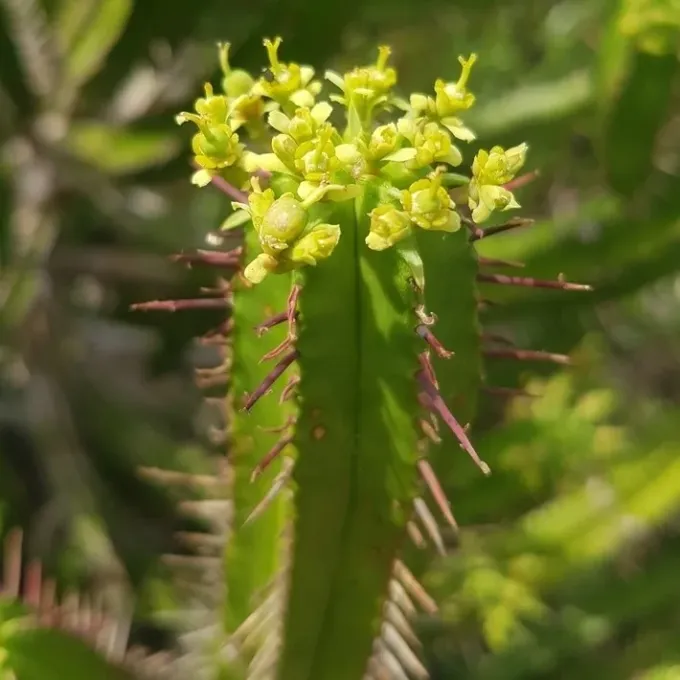
Description
Growing requirements
Euphorbia pentagona belongs to the Euphorbiaceae family and is native to the arid regions of Southern Africa. This succulent is highly valued for its geometric, five-angled stems that store water, allowing it to survive prolonged droughts in its natural habitat.
The plant requires full sun to partial shade for optimal health. When cultivated in indoor conditions, placing the plant in a spot with bright, indirect light ensures the preservation of its structural integrity and prevents the stems from becoming etiolated or thin.
Soil requirements focus primarily on drainage. A specialized cactus or succulent mix consisting of volcanic pumice, sand, and small amounts of organic loam is essential. This composition prevents root rot, which is the primary cause of failure in succulent cultivation.
Temperature management involves maintaining warmth during the active growing season, ideally between 20°C and 28°C. During the winter dormancy period, the plant thrives in cooler conditions, provided it is kept away from frost, which can cause internal cell damage.
Watering practices should be strictly seasonal. During the summer, water only when the substrate has dried out completely. In the winter, reduce watering to an absolute minimum to simulate the dry season, keeping the soil almost entirely desiccated to protect the roots.
Main diseases and pests
The most common disease affecting Euphorbia pentagona is fungal stem rot. This condition manifests as soft, discolored patches on the stems. Early detection is critical; affected areas should be excised with a sterile blade to stop the spread of necrosis.
Pest issues include mealybugs that congregate in the crevices between the ribs of the plant. These pests feed on the sap and can significantly weaken the specimen. Regular preventive applications of systemic pesticides or diluted neem oil are recommended for maintaining a healthy collection.