
Bluntleaf spurge
Euphorbia obtusata
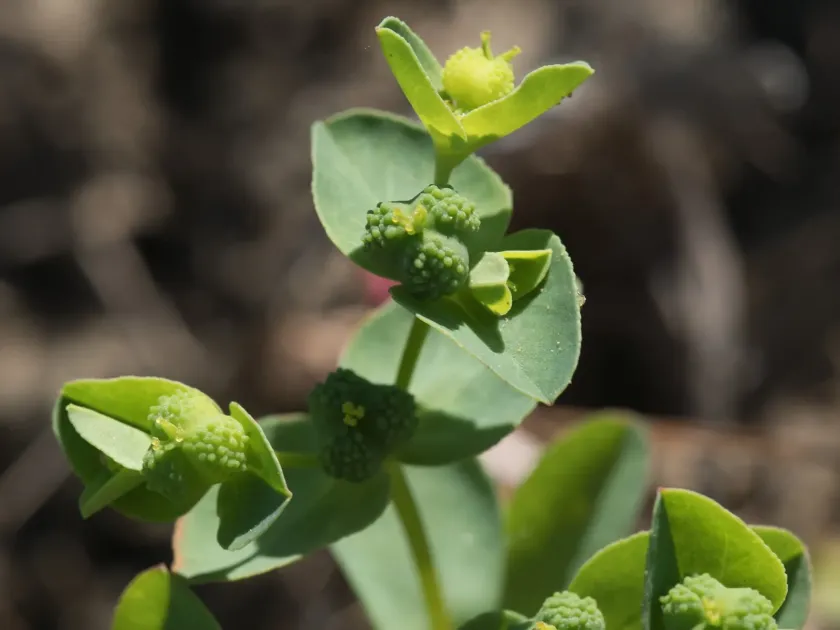
Description
Sowing dates
Bluntleaf spurge (Euphorbia obtusata) is primarily identified as a weed in agricultural landscapes rather than an intentional crop. The timing of its emergence is closely tied to the soil temperature and moisture levels during the early spring season.
Seeds typically germinate once the soil temperature in the upper profile reaches approximately 10–12 degrees Celsius. Major emergence events often coincide with the sowing period of spring crops, creating immediate competition for space and resources.
Effective management requires pre-sowing cultivation to eliminate seedlings before the main crop is established. Using harrowing or tilling during this window can significantly reduce the initial population density of the spurge.
The germination period can be extended depending on precipitation patterns. Agronomists should remain vigilant throughout the early growth stages of the crop to identify and mitigate any late-emerging spurge plants.
Since the seeds can remain viable in the soil for several years, a long-term strategy involving continuous monitoring and consistent suppression is essential to gradually deplete the seed bank within the field.
Growing requirements
This species thrives in well-lit environments and nutrient-rich soils. It often appears in areas with high nitrogen availability, where it can quickly outcompete less aggressive crop varieties if not properly managed.
Bluntleaf spurge demonstrates adaptability to various soil structures, including loams and clays. While it prefers neutral pH levels, it is resilient enough to handle moderate soil variability, making it a persistent guest in diverse agricultural regions.
The plant is well-adapted to temperate climates and can withstand short-term temperature fluctuations. Its ability to grow in various conditions allows it to occupy both cultivated land and field margins effectively.
Implementation of crop rotation is one of the most effective ways to manage spurge populations. Alternating crops with different planting dates and growth requirements helps disrupt the life cycle of this invasive species.
Maintaining soil health and fertility in balance with crop needs is vital. Over-fertilization can inadvertently benefit spurge growth, so precision nutrient management is recommended to keep the weed population under control.
Main diseases and pests
Bluntleaf spurge can serve as an alternative host for various agricultural pathogens. These diseases may persist on the weed during the off-season, posing a continuous threat to the health of nearby cash crops.
Certain insect pests, such as aphids, are known to utilize spurge as a food source. Once the weed is treated or disturbed, these pests may migrate to the primary crop, potentially causing damage that lowers final yields.
Diseases like powdery mildew may easily spread from spurge populations to sensitive cultivars. Regular field scouting and the removal of spurge from boundary areas are recommended to minimize the risk of infection spreading.
Chemical control can be challenging due to the plant's milky latex, which can interfere with herbicide absorption. Using systemic herbicides combined with surfactants is often necessary to ensure the active ingredients reach the plant's vascular system.
Mechanical destruction of the root system prior to the flowering phase is critical. Preventing the plant from producing seeds is the most effective method to ensure that the infestation does not compound in subsequent growing seasons.