
Euphorbia nivulia
Euphorbia nivulia
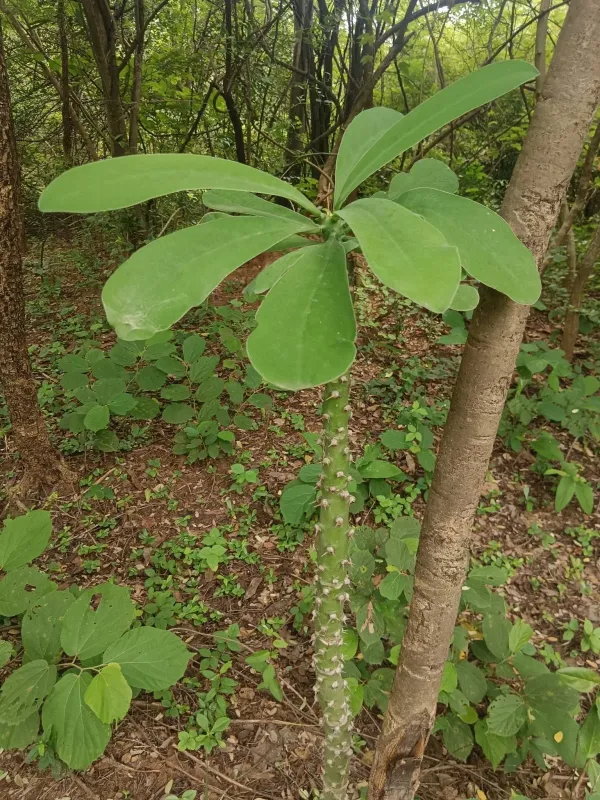
Description
Growing requirements
Euphorbia nivulia is a succulent shrub belonging to the Euphorbiaceae family, native to the arid regions of India and Southeast Asia. It is characterized by a thick, woody stem and prominent spines, making it a highly resilient species adapted to harsh, water-scarce environments.
The plant thrives in full sun exposure and requires high ambient temperatures to sustain its metabolic processes. It is essential to avoid shaded areas, as low light levels will cause the plant to etiolate and lose its structural integrity and disease resistance.
Soil requirements for this crop are strict: the medium must be highly porous and well-draining. A mix of sand, gravel, and minimal organic matter is ideal to prevent moisture accumulation around the root system, which is a major precursor to root rot.
In terms of agricultural management, irrigation should be strictly controlled, mimicking the natural drought cycles of its native habitat. During the winter dormancy period, watering should be reduced to an absolute minimum to prevent fungal proliferation.
The plant is historically significant for its medicinal latex, which is utilized in traditional medicine. Furthermore, due to its dense growth habit and presence of thorns, Euphorbia nivulia is often cultivated as a functional live fence or boundary marker in tropical agricultural systems.
Main diseases and pests
The most common threat to Euphorbia nivulia is root and stem rot caused by overwatering or poor drainage. These pathogens thrive in conditions where the substrate remains damp for extended periods, leading to the rapid decay of succulent tissues.
Pests such as mealybugs and spider mites are frequent nuisances for this culture. These insects thrive in hot, dry environments and can cause localized tissue death, leading to secondary viral or bacterial infections if left untreated.
Integrated pest management involves physical removal of pests followed by the application of targeted acaricides or insecticides. It is crucial to perform these applications during cooler parts of the day to avoid phytotoxic stress on the plant's epidermis.
Regular sanitation of the cultivation area is necessary to prevent the buildup of fungal spores. Removing fallen debris and maintaining adequate airflow between individual plants can significantly reduce the pressure of pathogenic organisms.
Using sterile propagation techniques and quarantined plant material helps maintain a healthy crop. If infection is detected, immediate isolation of the affected specimen is recommended to protect the integrity of the remaining planting area.