
Nicic's Spurge
Euphorbia niciciana
Description
Growing requirements
Nicic's Spurge (Euphorbia niciciana) belongs to the Euphorbiaceae family. This perennial herb is native to the Balkan Peninsula, where it has evolved to survive in rocky, nutrient-poor, and high-altitude habitats.
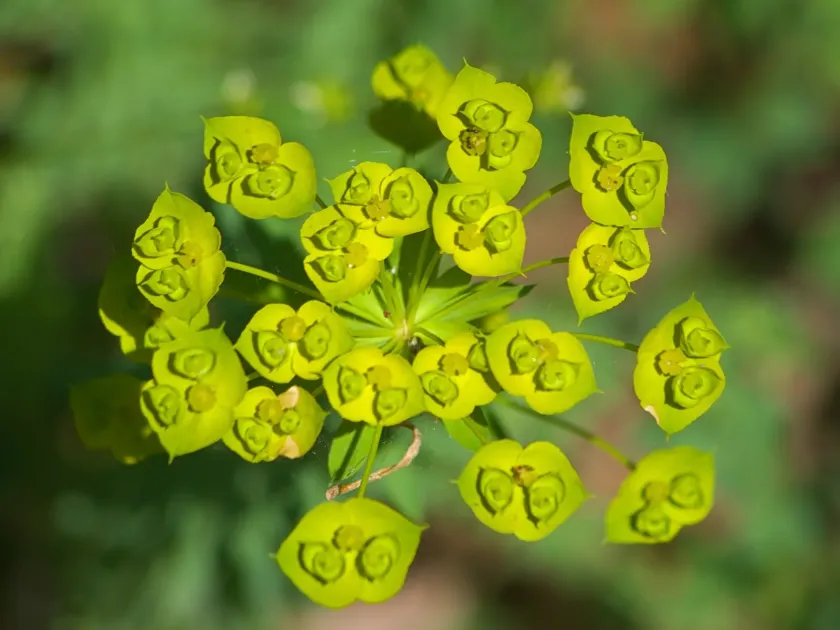
The plant features upright stems covered with narrow, glaucous-green leaves. Its reproductive organs, known as cyathia, are surrounded by conspicuous yellow-green bracts, characteristic of many species within the genus Euphorbia.
As a xerophytic plant, it is exceptionally well-adapted to arid conditions. Its root system is deeply penetrating, allowing it to thrive in gravelly and rocky soils where other agricultural crops would fail to establish.
The plant requires full sun exposure to maintain its structural integrity and health. Shade should be avoided as it leads to etiolation, making the stems weak and prone to lodging, which reduces the plant's overall viability.
Well-drained, alkaline to neutral soils are optimal for cultivation. It is highly sensitive to waterlogging; therefore, avoiding heavy clay soils or areas with a high water table is essential to prevent root decay.
Main diseases and pests
Root rot caused by fungal pathogens is the primary threat to Euphorbia niciciana, particularly in poorly drained environments. Ensuring a fast-drying soil profile is the most effective strategy for mitigating these risks.
Foliar diseases, including powdery mildew, may occur during seasons with high humidity. Proper spacing between individual plants is necessary to promote air circulation, which helps keep the foliage dry and healthy.
Due to the presence of acrid, toxic latex, the plant is naturally resistant to most herbivores and common agricultural pests. Chemical pest control is rarely required in standard cultivation scenarios for this species.
Young plants may be vulnerable to soil-dwelling larvae or cutworms. Early intervention or soil monitoring in the first year of growth is recommended to ensure the establishment of a robust root system.
Overall, the plant shows strong resilience to various environmental stresses. By maintaining appropriate soil chemistry and moisture levels, growers can expect high survival rates and consistent vegetative growth throughout the season.