
Nevada spurge
Euphorbia nevadensis
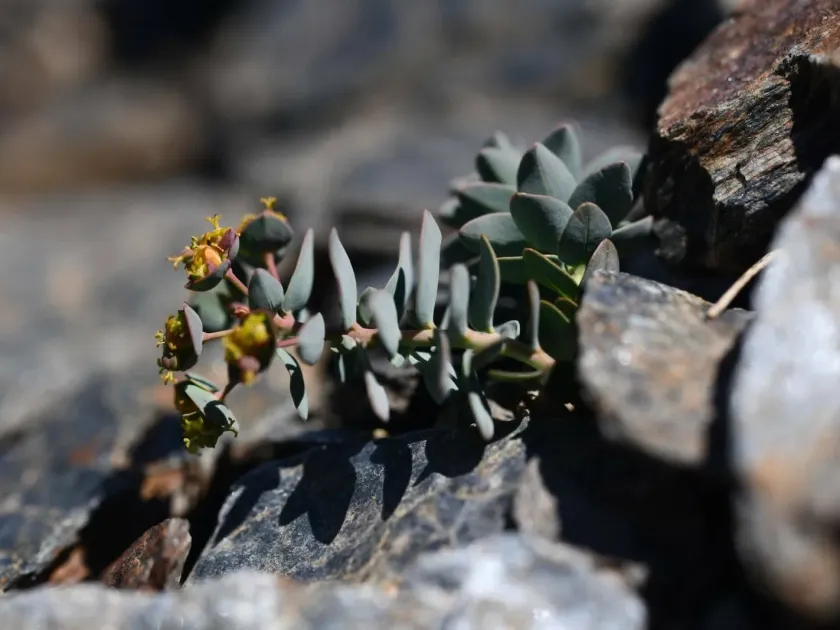
Description
Growing requirements
Nevada spurge (Euphorbia nevadensis) is a perennial herbaceous plant belonging to the Euphorbiaceae family. Native to the mountainous regions of the Iberian Peninsula and North Africa, this species has adapted to challenging environmental conditions characterized by marked seasonal variations in temperature and moisture.
The plant is classified as a xerophyte, showing remarkable resilience to arid conditions. It thrives in stony, well-drained soils that mimic its natural habitat. Adequate soil aeration is essential for the healthy development of its root system, as it cannot tolerate prolonged waterlogging.
Regarding climatic requirements, Nevada spurge prefers sunny exposures with sufficient heat units during the growing season. While it is hardy in its native Mediterranean climate, it benefits from moderate winter temperatures, although it exhibits significant frost tolerance typical of high-altitude flora.
In terms of soil composition, it shows a preference for limestone or neutral substrates. Its ability to extract minerals from nutrient-poor soil makes it a potential candidate for land restoration projects where traditional crop species fail to establish themselves.
The cultural practices for this species are limited, as it is primarily a wild-growing plant. However, in experimental agroecology, it is valued for its soil-binding properties and its role in increasing plant diversity within xerophytic ecosystems.
Main diseases and pests
The chemical defense system of the genus Euphorbia, involving a caustic latex, serves as a natural deterrent against many herbivores. This toxic milky sap significantly reduces the impact of generalist pests on the plant population.
Despite its chemical defense, the plant is susceptible to various fungal pathogens when cultivated in improper conditions. Root rot, caused by excessive moisture, remains the most significant threat to its longevity and vigor in agricultural settings.
Pests that occasionally affect the spurge include specialized aphids and certain lepidopteran larvae that have co-evolved to tolerate the plant's toxicity. However, these rarely reach levels that threaten the survival of a well-established stand.
Environmental threats also include soil compaction, which hinders the development of the primary root. Protecting the soil structure and avoiding intensive tilling are key to maintaining healthy populations of Nevada spurge.
Effective management against threats relies on maintaining optimal environmental parameters. Providing adequate light and preventing the accumulation of standing water are the most important strategies to ensure the health of this species.