
Euphorbia moratii
Euphorbia moratii
Description
Growing requirements
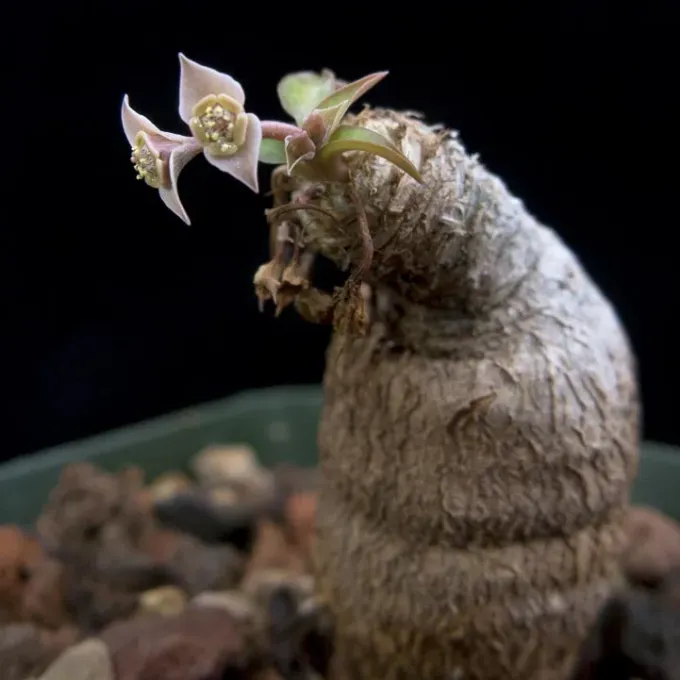
Euphorbia moratii is a distinctive caudex-forming succulent belonging to the Euphorbiaceae family. Originating from the rocky landscapes of Madagascar, this plant has evolved to store essential water reserves within its enlarged stem, allowing it to survive in arid, challenging environments.
For successful cultivation, the plant requires a climate that mimics its natural habitat: warm temperatures during the growth phase, ideally between 22°C and 28°C. During the winter, it enters a semi-dormant state and should be kept in a cool area with temperatures around 12°C to 15°C.
Soil requirements are strict regarding drainage. A highly mineral-based substrate, such as a mixture of pumice, coarse sand, and a minimal amount of organic compost, is necessary to prevent water retention. The pH level should remain neutral to slightly acidic to ensure proper nutrient uptake.
Light intensity is paramount for the health of Euphorbia moratii. It thrives in bright, filtered light. While it can tolerate some morning direct sun, intense mid-day heat requires protection to prevent scorching of the caudex and leaves, which can lead to permanent tissue damage.
Watering practices must be disciplined. The plant should be watered only when the potting medium has dried out completely. Overwatering, especially during the cool season, significantly increases the risk of crown and root rot, which are often fatal to the species.
Main diseases and pests
Root and caudex rot caused by fungal pathogens remains the primary threat to the stability of the plant. Maintaining adequate airflow around the base of the plant and choosing the right pot size are essential management strategies to mitigate this risk.
Pest issues frequently include spider mites and mealybugs. These pests thrive in dry conditions and can quickly colonize the succulent's growing points. Integrated pest management, including the application of systemic insecticides, is recommended for effective control.
Nematode infestations can occur if the soil is contaminated. To prevent this, sterilization of the growing medium prior to planting is highly recommended. Using inorganic components helps reduce the habitat available for soil-borne pests.
The plant produces a toxic latex sap that serves as an internal defense mechanism. Growers should be cautious when handling the plant, as direct contact with the sap can cause severe dermatitis or irritation to the eyes and mucous membranes.
General hygiene, such as removing fallen leaves and maintaining a clean growing area, is crucial to prevent the spread of opportunistic infections. Routine monitoring allows for the early detection of stress, enabling timely intervention to save the specimen.