
Euphorbia mitriformis
Euphorbia mitriformis
Description
Growing requirements
Euphorbia mitriformis is a perennial succulent belonging to the Euphorbiaceae family. Originating from the arid regions of Southern Africa, this species has evolved to thrive in environments with significant drought and intense solar exposure.
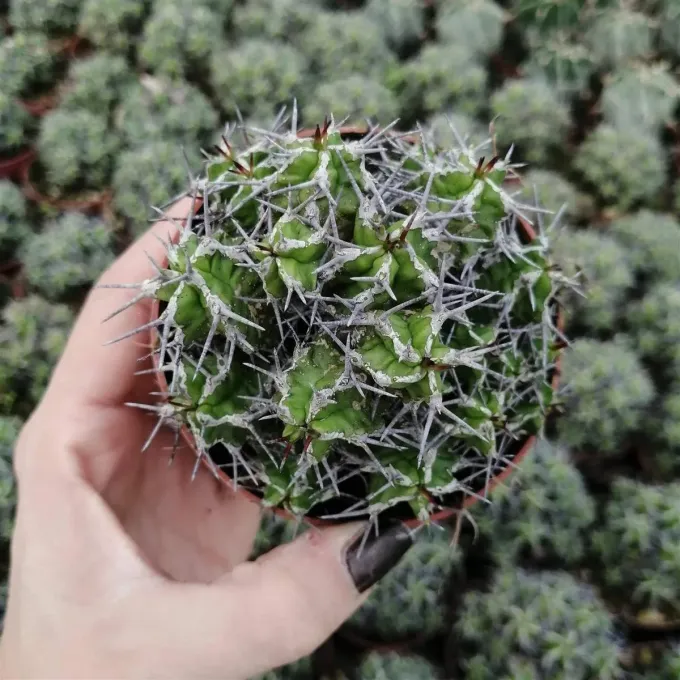
Botanically, the plant is recognized by its distinct, ribbed stem structure which forms a compact, mitre-like shape. This characteristic appearance makes it highly sought after for specialized succulent collections and ornamental greenhouse cultivation.
Cultivation requires a highly porous and well-draining soil mix. A composition of inorganic materials such as pumice, coarse sand, and perlite is essential to ensure that water does not accumulate around the delicate root system.
High light intensity is mandatory for the health of Euphorbia mitriformis. Inadequate light levels lead to etiolation, resulting in a loss of the plant's natural compact structure and structural integrity. Greenhouse settings often require supplemental lighting during the off-season.
Environmental management involves seasonal adjustments. During the active growth phase, moderate warmth is needed, while the dormant period requires cooler temperatures and a significant reduction in watering to simulate the plant's native habitat cycles.
Main diseases and pests
The primary threats to Euphorbia mitriformis include various types of root and stem rot. These conditions are almost exclusively triggered by overwatering or poor drainage, which creates an environment conducive to fungal pathogens.
Pest infestations, particularly mealybugs, represent a common challenge. These insects often aggregate in the deep crevices between the plant's ribs, making physical removal and manual application of insecticides difficult for the grower.
Prevention strategies are centered on strict moisture control and consistent air circulation. Ensuring the substrate dries out completely between waterings is the most effective way to prevent the development of root-related issues.
When pests or diseases are identified, immediate intervention with specialized systemic fungicides or acaricides is recommended. Growers must be cautious, as Euphorbia species can react negatively to certain solvent-based treatments.
Regular monitoring of the plant's condition is essential for success. Since the species is slow-growing, any damage sustained from pests or disease can result in permanent cosmetic defects, making prevention far superior to later treatment.