
Euphorbia micracantha
Euphorbia micracantha
Description
Growing requirements
Euphorbia micracantha is a perennial succulent shrub belonging to the Euphorbiaceae family. Originating from the arid regions of Africa, this species has evolved specific morphological adaptations to thrive in harsh environments with limited water availability.
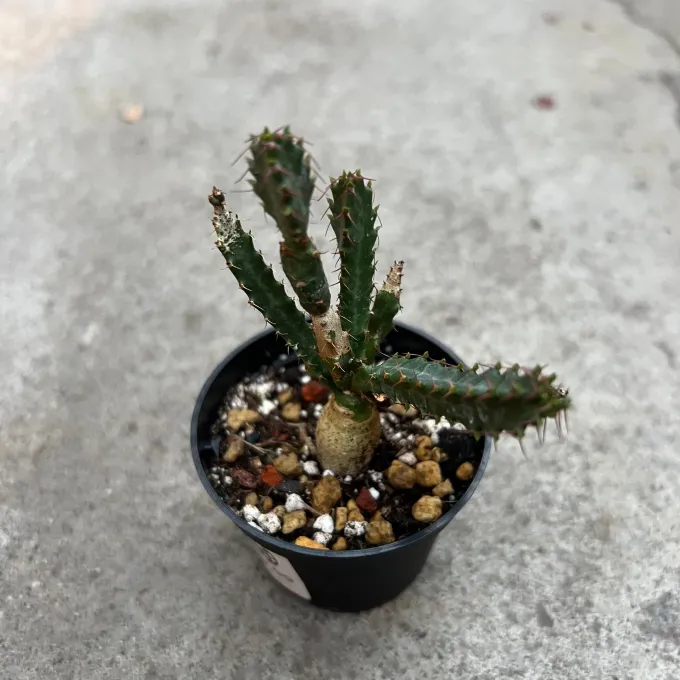
Botanically, it is characterized by succulent, segmented stems adorned with numerous small but sharp spines, which provide defense against herbivores. Like other members of the genus, it produces a milky latex that is characteristic of the family.
The plant requires high light levels to maintain its compact growth form. Insufficient sunlight leads to etiolation, resulting in weak, elongated stems that lose their aesthetic value and structural integrity over time.
Soil requirements for Euphorbia micracantha are strict: it demands a highly porous and well-draining substrate. Growers should prioritize mineral-based mixes containing coarse sand, pumice, or perlite to prevent root asphyxiation and rot.
Regarding its utility, the plant is primarily used as an ornamental specimen in xeriscaping or as a collector’s item for succulent enthusiasts. Its unique appearance and low maintenance in controlled environments make it a popular choice for desert-style garden designs.
Main diseases and pests
The primary threats to Euphorbia micracantha are fungal pathogens, specifically those causing stem and root rot, often triggered by overwatering or poor air circulation. Maintaining a dry environment around the base of the plant is critical.
Pests such as mealybugs represent a significant nuisance, as they cluster in the tight spaces between the spines. Additionally, spider mites can become an issue in low-humidity environments, requiring consistent monitoring and appropriate pest management practices.