
Euphorbia mesembryanthemifolia
Euphorbia mesembryanthemifolia
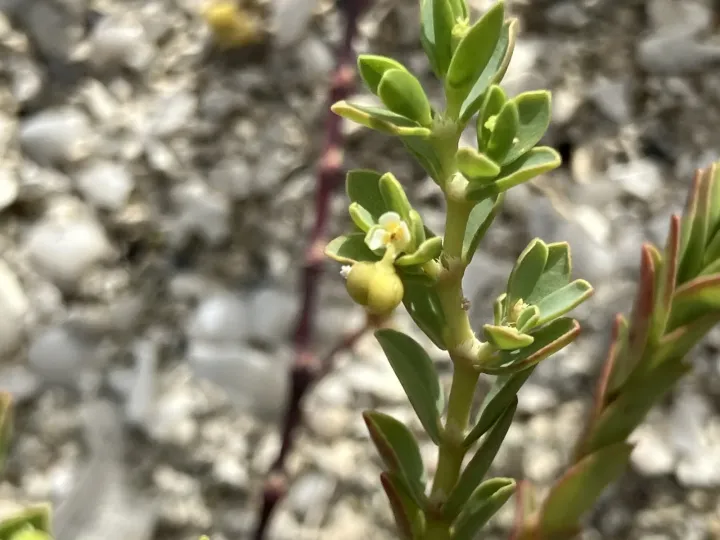
Description
Growing requirements
Euphorbia mesembryanthemifolia is a hardy succulent species belonging to the Euphorbiaceae family. It is native to the coastal dunes and beaches of the Caribbean, Mexico, and Florida, where it plays a significant role in stabilizing sandy soils.
The plant exhibits remarkable physiological adaptations to extreme coastal environments, including high salinity tolerance and the ability to thrive in poor, sandy substrates. Its succulent leaves store water, allowing it to survive prolonged dry spells without irrigation.
For successful cultivation, excellent drainage is the most important requirement. The substrate should be primarily sandy, mirroring the plant's natural habitat. Any tendency for the soil to retain water will likely result in root system failure and plant death.
Full sun exposure is strictly required for this species. In cultivation, even slight shading can cause the plant to become etiolated and lose its compact, attractive morphology, making it more susceptible to environmental stressors and pests.
The temperature range must remain consistently warm, as the species is strictly frost-intolerant. Tropical and subtropical climates are ideal, with temperatures ideally staying above 15°C even during the cooler periods of the year for optimal metabolic activity.
Main diseases and pests
Root rot, caused by excessive moisture and poor drainage, remains the primary threat to Euphorbia mesembryanthemifolia. Implementing a strict irrigation schedule that allows the soil to dry out completely is the best preventative measure.
Pests such as mealybugs and spider mites are common in greenhouses with low air circulation. Integrated Pest Management (IPM) practices, including the use of systemic insecticides, are necessary to maintain the health of the specimens.
The plant produces a milky latex that is highly irritating to the skin and eyes. Agricultural workers must use protective gear, including gloves and face protection, whenever they prune or handle the plants to prevent irritation.
Mechanical injuries to the succulent stems provide entry points for secondary bacterial and fungal infections. Disinfecting tools with alcohol or a bleach solution between plants is a standard procedure to ensure a disease-free production environment.
Environmental stress, such as sudden changes in temperature or insufficient sunlight, can weaken the plant's natural defenses, making it more vulnerable to opportunistic pathogens. Monitoring the light levels and humidity is essential for maintaining crop vigor.