
Euphorbia medicaginea
Euphorbia medicaginea
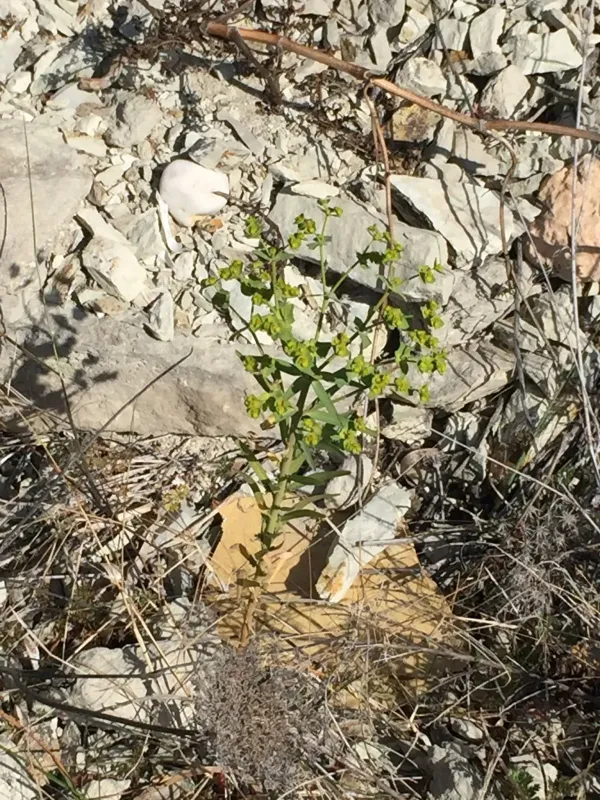
Description
Sowing dates
Euphorbia medicaginea belongs to the Euphorbiaceae family. While not a conventional agricultural crop, it is a plant of interest in agronomy due to its status as a persistent weed species.
The plant initiates its vegetative cycle in the spring, with germination triggered when soil temperatures reach approximately 10 to 12 degrees Celsius.
Seeds are known for their high viability and longevity, allowing the population to persist in the seed bank for several seasons if left uncontrolled.
Agricultural management requires careful timing of primary tillage to ensure that seedlings are eliminated before they reach the flowering stage.
In regions where this plant is endemic, crop rotation must be carefully planned to include dense canopy crops that can outcompete Euphorbia species for sunlight.
Growing requirements
Euphorbia medicaginea thrives in open, sunny environments and prefers well-drained, light-textured soils such as sandy loams.
The species exhibits remarkable drought tolerance, supported by a deep taproot system that allows it to access water resources unavailable to many shallow-rooted crops.
It prefers neutral to slightly alkaline soil conditions and is highly sensitive to excessive shading, which significantly inhibits its biomass development.
Optimal growth is observed in regions with low to moderate rainfall, as high humidity and waterlogging limit its distribution.
Nitrogen-rich fertilizers can promote aggressive growth of this plant, making it a severe competitor for nutrients in poorly managed field plots.
Main diseases and pests
This weed acts as a primary host for several soil-borne pathogens, including Fusarium species, which can compromise the health of adjacent agricultural crops.
Pest populations, such as aphids and specific beetles, frequently utilize the plant as a refuge, potentially increasing the risk of viral transmission.
Chemical control is complicated by the presence of a waxy cuticle on the leaf surface, which reduces the penetration of systemic herbicides.
Management strategies often involve a combination of mechanical hoeing and the use of specialized herbicide formulations applied during the early vegetative stage.
Without proper monitoring, the rapid spread of the plant can lead to significant yield losses in sensitive crops due to resource depletion.